Creator SystemsJanuary 21, 20268 min read
Building a Research Intelligence System: How I Use AI Agents for Daily Knowledge Operations
A deep dive into the multi-agent research system powering FrankX.AI - five specialized agents, three workflow modes, and a publication pipeline optimized for the AI age.

🎯
Reading Goal
Learn how to build your own AI-powered research system for daily intelligence operations
TL;DR: I built a Research Intelligence System using Claude Code that runs daily scans across AI, consciousness, and personal development domains. Five specialized agents collaborate to transform information overload into actionable intelligence, then publish findings optimized for both human readers and AI citation. Here's exactly how it works.
The Problem: Information Overload in the AI Age
Every day, hundreds of papers hit arXiv. Thousands of discussions happen on Twitter, Reddit, and Hacker News. Breakthroughs get announced, tools get released, paradigms shift.
If you're trying to stay current across multiple domains—AI, consciousness research, personal development—the firehose is overwhelming. You can either:
- Drown - Try to read everything, accomplish nothing
- Miss - Focus narrowly, miss cross-domain insights
- Systematize - Build a research system that works for you
I chose option 3.
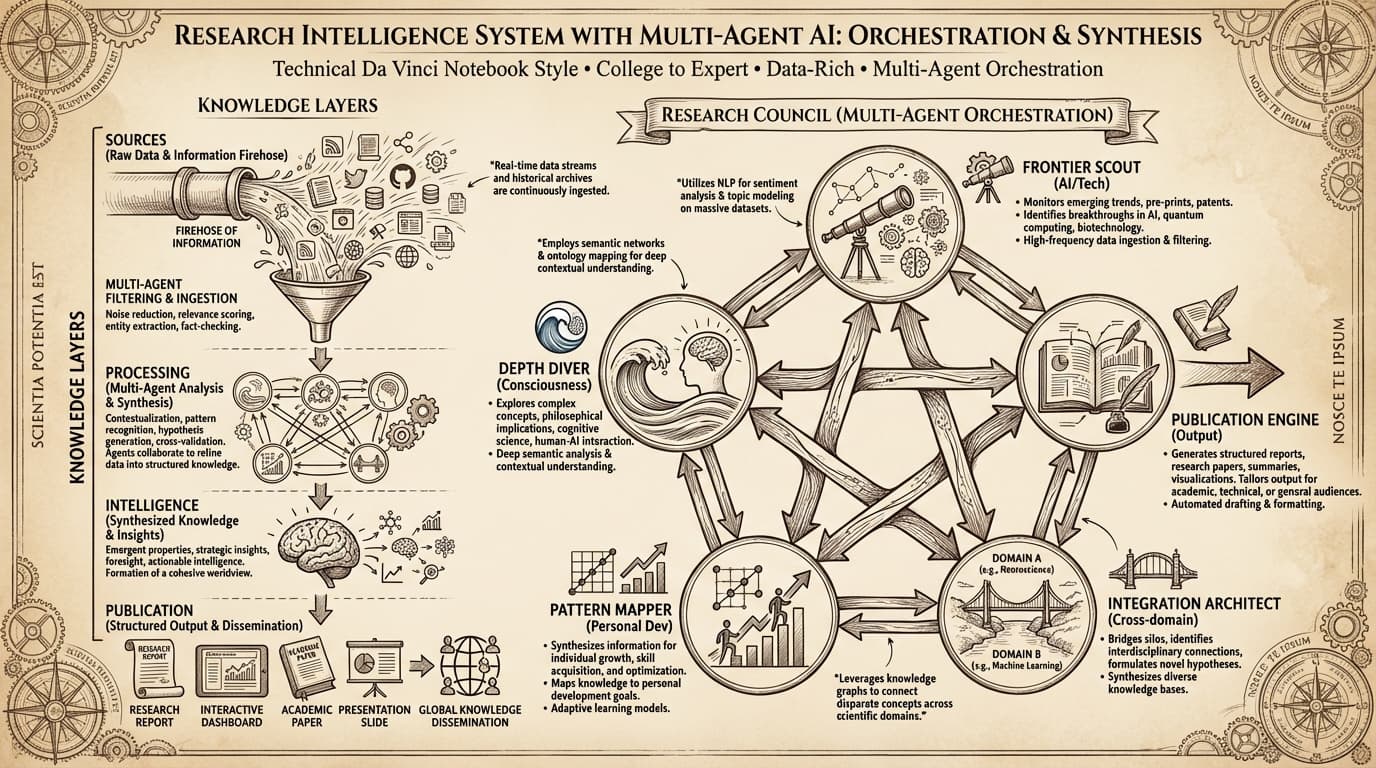
The Research Council: Five Specialized Agents
Instead of one general-purpose research assistant, I created a "Research Council"—five agents with distinct personalities, source preferences, and output styles.
1. The Frontier Scout (AI & Technology)
Focus: Tracking cutting-edge AI developments before they hit mainstream
Sources: arXiv papers, GitHub trending, Hacker News, r/LocalLLaMA, company blogs
Output style: Technical accuracy with accessible explanations, comparison tables, "so what?" analysis
The Frontier Scout doesn't just report news—it connects academic research to practical applications. When a new paper drops, the question is always: "How does this change what's possible?"
2. The Depth Diver (Creativity & Human Experience)
Focus: Exploring creativity, human potential, and meaningful technology
Sources: Academic journals, behavioral science research, psychology, wisdom traditions
Output style: Bridges scientific rigor with experiential understanding, acknowledges limitations
The Depth Diver respects both peer-reviewed research and long-standing creative traditions. When creativity research advances, it's connected to practical applications. When neuroscience reveals something about attention, it's linked to what practitioners have always known.
3. The Pattern Mapper (Personal Development)
Focus: Extracting actionable frameworks from peak performance research
Sources: Huberman Lab, behavioral psychology, creator economy newsletters, productivity tools
Output style: Clear frameworks, step-by-step implementation, common pitfalls
The Pattern Mapper has a bias toward action. Research is only valuable if it changes behavior. Every finding gets translated into "here's what you do Monday morning."
4. The Synthesis Oracle (Cross-Domain Integration)
Focus: Finding connections invisible to specialists
Methods: Analogical transfer, pattern matching, contradiction resolution, edge case exploration
Output style: Novel hypotheses, "what if" experiments, provocative questions
The Synthesis Oracle asks: "What does AI embodiment tell us about consciousness?" or "How do meditation practices inform AI safety?" The most valuable insights often live at domain boundaries.
5. The Publication Architect (Content & SEO Strategy)
Focus: Transforming research into discoverable content
Methods: GEO optimization, FAQ generation, schema markup, distribution planning
Output style: Content briefs, keyword targets, structured outlines
The Publication Architect ensures research doesn't die in a folder. Every insight gets a publication path—whether that's a pillar article, Twitter thread, or newsletter section.
Three Workflow Modes
The system operates in three modes, each serving a different purpose:
Mode 1: Daily Scan (/research)
When: Every morning Duration: 15-30 minutes Output: Intelligence brief with signals across all domains
The daily scan is like having a team of research analysts who stayed up all night reading. I get headlines, key signals, FrankX project relevance, and content opportunities—all synthesized before my first coffee.
# 📡 Daily Intelligence Brief

**Date**: 2026-01-21

## 🤖 Generative AI Domain

### Key Signal

Anthropic released Claude 3.5 Opus with extended thinking...

### FrankX Relevance

Implications for Agentic Creator OS architecture...

## 🧘 Consciousness Domain

### Key Signal

New fMRI study on meditation and default mode network...

## 📝 Content Opportunities

| Topic                      | Type    | Priority |
| -------------------------- | ------- | -------- |
| Extended thinking patterns | Article | High     |
Mode 2: Deep Dive (/research [topic])
When: When a signal needs investigation Duration: 1-2 hours Output: Structured research folder with multiple documents
Deep dives produce comprehensive research packages:

Mode 3: Publication (/research publish [topic])
When: Research is ready for distribution Duration: 2-4 hours Output: GEO-optimized content ready for publishing
Publication mode transforms research into content structured for both human readers and AI citation:
- TL;DR in first 100 words (AI extracts this first)
- Question-based H2s (matches search intent)
- FAQ section (powers "People Also Ask")
- Schema markup (Article + FAQPage + HowTo)
- Internal links (builds topical authority)
Why This Beats Traditional Research
1. Parallel Processing
Five agents can scan five domains simultaneously. What would take me hours of tab-switching happens in minutes.
2. Cross-Domain Synthesis
The Synthesis Oracle catches connections I'd miss. When AI research echoes consciousness studies echoes productivity science, that's where the insights live.
3. Publication-Ready Output
Research that sits in folders is wasted research. The Publication Architect ensures every insight has a path to audience.
4. Consistent Quality
The agents follow documented methodologies. Quality doesn't depend on whether I had enough coffee.
5. Institutional Memory
Research builds on research. The system remembers what it learned, connects new findings to old, and maintains context across sessions.
How to Build Your Own
The Research Intelligence System runs on Claude Code with these components:
1. Skill Definition (.claude/commands/research.md)
Define your research domains, agent personalities, and output formats. The more specific your agent descriptions, the better the results.
2. Agent Profiles (.claude/skills/research/CLAUDE.md)
Document each agent's focus areas, source preferences, and output styles. Include activation commands like "Activate Frontier Scout for AI research."
3. Template Structure (/research/_templates/)
Create standardized templates for research outputs. Consistency enables comparison across topics.
4. MCP Integration
Use WebSearch for real-time information, Memory for context persistence, and Sequential Thinking for complex analysis.
5. Publication Pipeline
Connect research outputs to your content workflow—whether that's a blog, newsletter, or social media.
The Future: Continuous Research
The current system is manual—I invoke /research each morning. The next evolution is continuous research:
- Automated signal detection across RSS feeds, social media, and paper repositories
- Priority scoring to surface what matters most
- Draft generation for high-priority topics
- Distribution automation across platforms
The goal isn't to remove humans from research—it's to amplify human judgment with AI capability. The agents do the scanning; I do the sense-making.
Key Takeaways
-
Specialize your agents - Generic assistants produce generic research. Domain-specific agents with distinct personalities produce insights.
-
Design for synthesis - The magic happens when domains collide. Build cross-domain integration into your system.
-
Optimize for publication - Research that isn't shared is research wasted. Build publication into the workflow, not as an afterthought.
-
Start with your actual interests - The best research system serves your genuine curiosity. Mine covers AI, consciousness, and personal development because that's what I care about.
-
Iterate on methodology - The agents improve as you refine their instructions. Document what works, prune what doesn't.
Frequently Asked Questions
What tools does the Research Intelligence System use?
The system runs on Claude Code with WebSearch MCP for real-time web research, Memory MCP for context persistence across sessions, and Sequential Thinking for complex multi-step analysis.
How long does a daily research scan take?
The daily scan runs in 15-30 minutes and produces an intelligence brief covering all configured domains. Deep dives take 1-2 hours for comprehensive topic coverage.
Can I customize the research domains?
Yes. The system is fully configurable. You define your domains, agent personalities, source preferences, and output formats in the skill definition files.
How is this different from just using ChatGPT for research?
Three key differences: (1) specialized agents produce better results than generic prompts, (2) the system maintains context across sessions via Memory MCP, and (3) outputs are structured for publication, not just personal notes.
What is Generative Engine Optimization (GEO)?
GEO is the practice of structuring content so AI assistants (ChatGPT, Perplexity, Claude) can easily cite and reference your work. It includes TL;DR summaries, FAQ sections, clear definitions, and schema markup.
How do I get started building my own research system?
Start with Claude Code and define one research domain. Create an agent profile with specific source preferences and output styles. Run daily scans for a week, then refine based on what's useful.
Try It Yourself
The Research Intelligence System powers the FrankX Research Hub. Explore the methodology, see published research, and subscribe to intelligence briefs.
Related Articles
- Claude Code 2.1 MCP Revolution — The tools powering this research system
- Agentic Creator OS — The broader creator intelligence framework
- Production LLM Agents on OCI — Enterprise-grade agent deployment
This article was researched and written using the system it describes. Meta, I know.
Get Started
Build your first AI system
Step-by-step guide to setting up ACOS, creating your first agent, and shipping real products with AI.
Start buildingTemplates & Blueprints
Production-ready architecture
Download AI architecture templates, multi-agent blueprints, and prompt engineering patterns.
Browse templatesInner Circle
Join the builder community
Connect with creators and architects shipping AI products. Weekly office hours, shared resources, direct access.
Join the circleRelated Research

Read on FrankX.AI — AI Architecture, Music & Creator Intelligence
Stay in the intelligence loop
Weekly field notes on AI systems, production patterns, and builder strategy.
Continue Reading
Creator Systems18 min
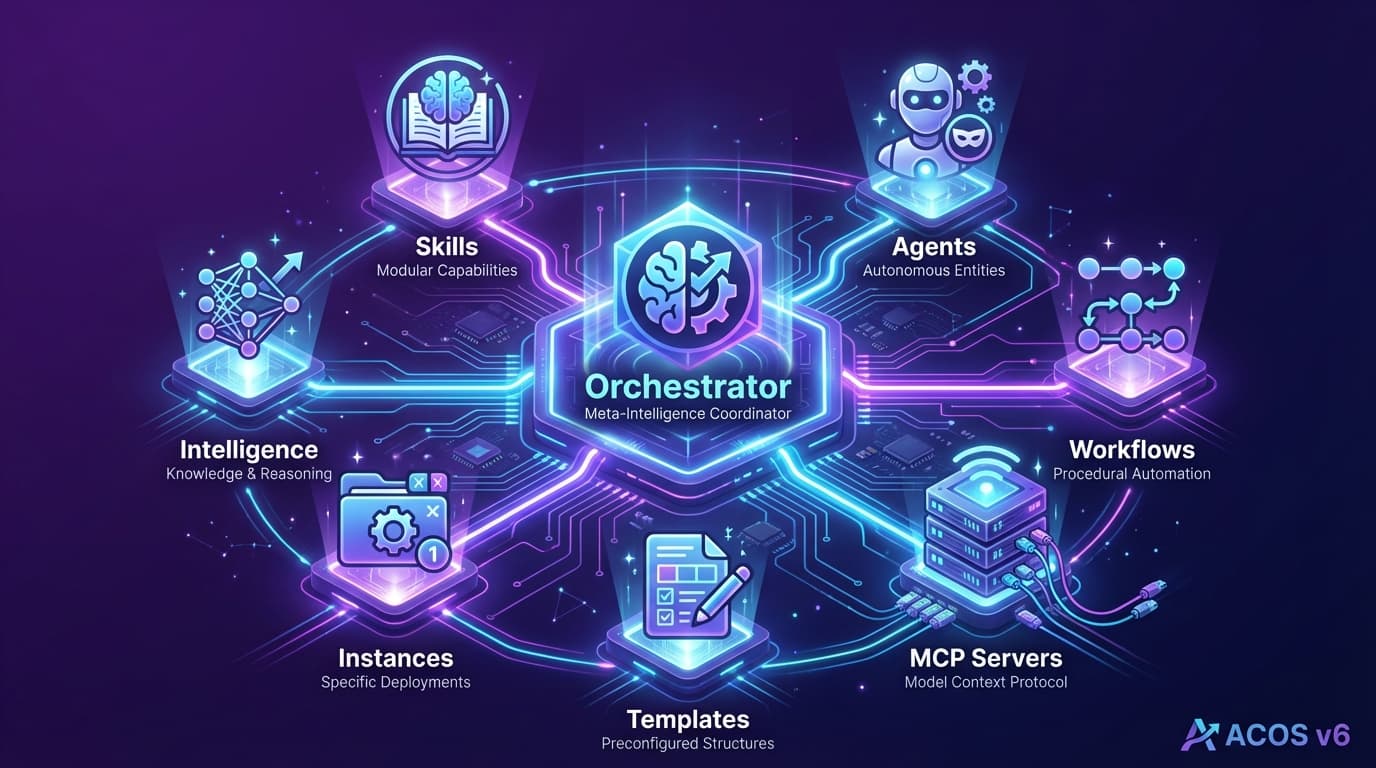
The Complete Guide to Agentic Creator OS v6: Your AI Operating System
Master the AI operating system that transforms Claude Code into a full creative studio. 25 commands, 80+ skills, swarm intelligence, and auto-activation. The definitive guide.
Read article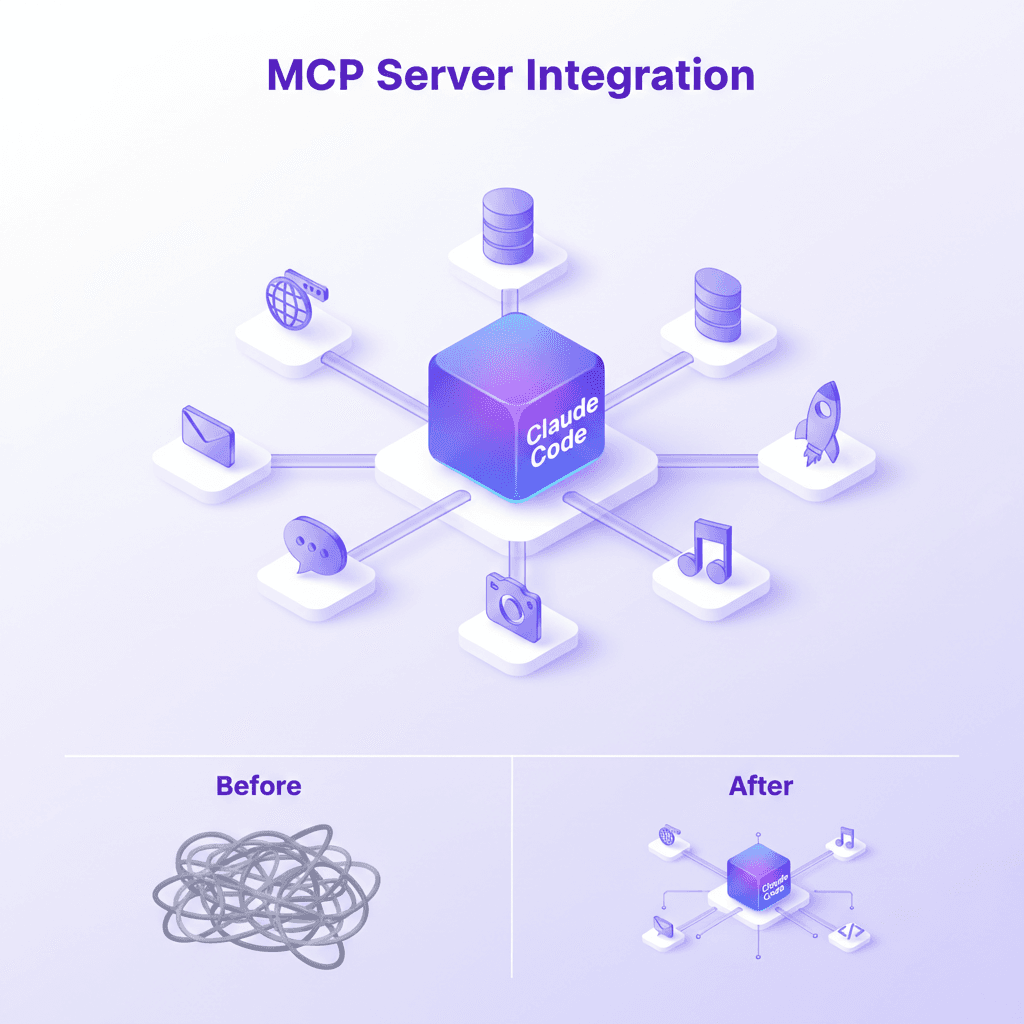
AI Architecture14 min
MCP Server Integration: Connect ACOS to Everything
Master the Model Context Protocol. Learn how ACOS connects to browsers, databases, APIs, and external tools through 7 MCP servers. Build your own integrations.
Read article
AI Architecture7 min
Inner HR: The AI Agent for Your Internal Team
Most leadership failures are not strategy failures — they are part-capture failures. An Inner HR agent helps you lead your inner team so you can lead the outer one.
Read article