Intelligence DispatchesJune 6, 20269 min read
The AI Superpowers Stack 2026: The Best Tool and MCP for Every Creator Job
A curated stack — the single best AI tool and the MCP server that gives an agent that power — for content, websites, research, image, video, music, automation, coding, and voice.

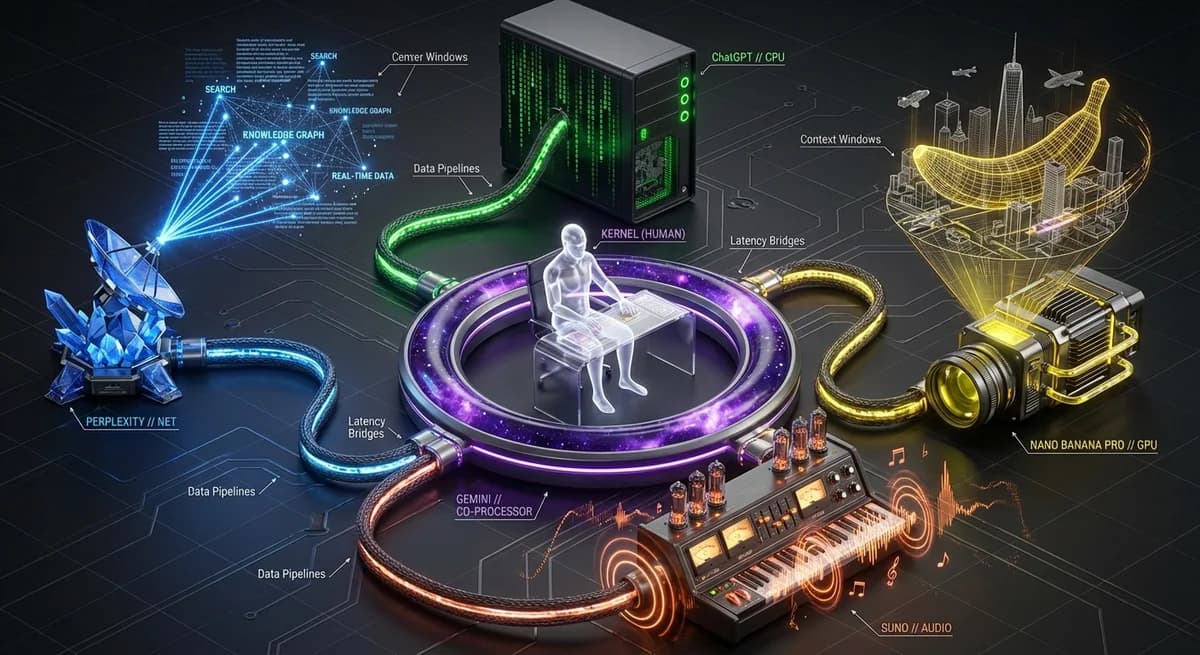
Reading Goal
You will leave with a named best pick for every creative job — plus the MCP server that lets an AI agent do it for you — and know what NOT to buy.
TL;DR — For each creative job there's a best tool and a best MCP server (the thing that gives an AI agent that capability). Writing: Claude + Notion MCP. Websites: v0 + Vercel MCP. Research: Perplexity → NotebookLM → Claude + Brave Search MCP. Image: Nano Banana Pro. Video: Veo 3.1, accessed through Higgsfield + its MCP. Music: Suno. Automation: n8n + its MCP Server Trigger. Coding: Claude Code + Context7. Voice: ElevenLabs. The 15 MCP servers worth knowing are at the end. The one rule: curate per project — agents silently drop tools past ~40.
What actually changed about the AI stack in 2026?
Two years ago, "what AI tools should I use" was a list of websites you opened in browser tabs. In 2026 the question split in two:
- Which tool is best at the job? (you, using it directly)
- Which MCP server gives an agent that capability? (Claude Code or another agent, using it for you)
MCP — the Model Context Protocol is the standard that lets an AI agent reach outside its own context: read your files, query your database, deploy your site, generate a video. The best operators in 2026 don't just use tools — they wire the right MCP servers into their agent so the work happens without them in the loop.
So this guide gives you both columns: the best tool to use, and the MCP that automates it. Every fact here was verified for June 2026.
What's the best AI tool for content creation?
For the actual writing, Claude leads on structured, reasoned long-form — it holds an argument across 2,000 words better than anything else. For turning one long video into a week of social clips, Opus Clip (~$19/mo) auto-finds the moments, captions, and reframes to vertical. For on-brand marketing at scale, Jasper spins one core asset into blog, email, and ads.
| Job | Best pick | Why |
|---|---|---|
| Long-form writing | Claude | Structure + nuance over long outputs |
| Repurposing video → shorts | Opus Clip | Auto moments, captions, reframe |
| On-brand marketing volume | Jasper | Brand Voice → every format |
| Social scheduling | Typefully / Buffer | Threads + calendar |
The MCP that automates it: Notion MCP — semantic search and write access to your content workspace, so an agent can draft straight into your system. Pair with Slack MCP for distribution.
What's the best AI tool for building a website or app?
It depends on who you are. If you ship Next.js, v0 (Vercel) produces production-grade React components and pairs natively with the Vercel MCP. If you're non-technical and want a real product (database, auth, the works), Lovable is the strongest default. For a fast throwaway prototype, Bolt.new; for designer-led marketing sites, Framer (which has its own MCP server).
| You are… | Best pick |
|---|---|
| A Next.js team | v0 |
| Non-technical, want a real SaaS | Lovable |
| Prototyping fast and disposably | Bolt.new |
| Designer building a marketing site | Framer / Webflow |
The MCP that automates it: Vercel MCP — deployments, environment variables, build logs, and project creation, all driven from your agent.
What's the best AI research tool in 2026?
No single tool — a chain. Perplexity (Deep Research) is best for real-time discovery and current data. NotebookLM is best for grounded analysis of documents you upload. Claude is best for reasoning over what you found. The pro move, cited everywhere: Perplexity to discover → NotebookLM to ground → Claude to reason — measurably more reliable than any one of them alone.
For short-form video ideation specifically, sandcastles.ai ($39–499/mo) mines "outlier" videos that massively over-performed their channel and reverse-engineers the hook. Note what it is: a research and ideation engine, not a generator.
The MCP that automates it: Brave Search MCP (an independent web index with no tracking) and Fetch MCP (pull any URL into the agent as clean markdown). For coding research, Context7 injects live, version-specific docs.
What's the best AI tool for image, video, and music?
These each have a dedicated deep-dive, so here's the short version with the current best pick.
- Image: Nano Banana Pro (Gemini 3 Pro Image) leads on quality and speed; GPT Image 2 wins text-in-image; FLUX.2 is the open-weight value pick. Full breakdown: Best AI Image Generators 2026.
- Video: Veo 3.1 is the safest all-rounder (prompt adherence, native audio, 4K). Higgsfield is the access layer worth knowing — 30+ models in one place plus Soul ID for character identity across shots, and it has an MCP so Claude Code can generate video directly. Full breakdown: AI Video Generation 2026.
- Music: Suno (v4.5+) for full commercial-quality songs; Udio for audiophile fidelity. Full breakdown: Suno Prompt Engineering Guide.
The MCP that automates it: Higgsfield MCP for video (Claude Code → Kling / Veo / Runway + Soul ID), and fal.ai for batch image generation.
What's the best AI tool for automation and agents?
n8n is the pick for anyone technical — self-hostable, dev-grade, with ~70 AI nodes. More importantly, its MCP Server Trigger lets you expose any workflow as a callable agent tool, which cleanly separates reasoning (the LLM) from action (the workflow). For breadth, Zapier reaches 8,000+ apps and exposes them to Claude via Zapier MCP. For no-code business agents, Lindy.
The MCP that automates it: n8n MCP Server Trigger — the action backend for your agents. Composio is the shortcut: one connector to thousands of app tools.
What's the best AI coding agent and which MCP servers does it need?
Claude Code is the canonical agentic coding environment in 2026 — deepest MCP and skills support. Cursor is the IDE-native alternative, with one caveat: it has roughly a 40-tool MCP ceiling, past which agents silently lose tools. So curate your MCP servers per project; don't load all fifteen at once.
The four coding MCP servers worth installing first:
| MCP | Unlocks |
|---|---|
| Context7 | Live, version-specific docs (the #1 MCP of 2026) |
| GitHub | Repos, PRs, issues, code search |
| Filesystem | Secure, scoped file access |
| Playwright | Browser automation via the accessibility tree |
For the full "build your own agent" pattern, see Build Your Own Jarvis with Claude Code.
What's the best AI voice tool?
Simple rule: ElevenLabs if you're buying a voice (TTS, instant and pro cloning, dubbing, conversational agents, a full developer API). Descript if you're buying an editing workflow (record to publishable fastest, text-based audio/video editing, captions, clips).
The 15 MCP servers every AI-architect should know
These are the connectors that turn a chat model into an operator. Install per project — not all at once.
| # | MCP server | Unlocks |
|---|---|---|
| 1 | Context7 | Live version-specific docs |
| 2 | Filesystem | Scoped local file read/write |
| 3 | GitHub | Repos, PRs, issues, code search |
| 4 | Playwright | Browser automation via a11y tree |
| 5 | Brave Search | Independent web search, no tracking |
| 6 | Fetch | Any URL → clean markdown |
| 7 | Notion | Semantic search + write your workspace |
| 8 | Slack | Read/post/schedule messages |
| 9 | Postgres / Supabase | Query + manage your database |
| 10 | Stripe | Customers, subscriptions, invoices, payment links |
| 11 | Vercel | Deployments, env vars, build logs |
| 12 | Figma | Dev-Mode design context + FigJam diagrams |
| 13 | Higgsfield | Cinematic video gen + Soul ID |
| 14 | n8n (Server Trigger) | Expose any workflow as an agent tool |
| 15 | Linear | Issues, projects, cycles for agent planning |
Two worth a special mention for a creator stack: Qme AI — an MCP connector that lets Claude watch a video you drop in and store the insight in a compounding second brain — and Composio, which collapses thousands of app integrations into one connector.
How should you actually assemble your stack?
Don't buy everything. Pick one tool per job you do weekly, install only the MCP servers a given project needs, and let the agent do the repetitive part. The expensive mistake in 2026 isn't picking the "wrong" tool — they're all good enough — it's paying for fifteen subscriptions you touch twice. Start with the best pick in the two or three jobs that are actually your bottleneck.
This is the same logic behind the Personal AI CoE — enterprise-grade architecture (strategy, tools, data, governance) applied to one person's workflow at a fraction of the cost.
FAQ
What is an MCP server and why does it matter?
MCP (Model Context Protocol) is the open standard that lets an AI agent reach outside its own context — read files, query databases, deploy sites, generate media. It matters because in 2026 the leverage isn't using a tool yourself; it's wiring the right MCP into your agent so the work happens without you. Claude Code is MCP-native.
What's the single best AI tool for most creators?
For writing and reasoning, Claude. For everything else it's job-specific — Nano Banana Pro for images, Veo 3.1 for video, Suno for music, ElevenLabs for voice, n8n for automation. There is no one tool; there's a best pick per job.
Do I need to install all 15 MCP servers?
No — and you shouldn't. Agents (Cursor especially) lose reliability past roughly 40 tools, and each MCP adds several. Install per project: a coding project wants Context7 + GitHub + Filesystem + Playwright; a content project wants Notion + Brave Search + Fetch.
What are sandcastles.ai and qme.ai?
Sandcastles is a short-form video research engine — it mines outlier videos and reverse-engineers their hooks for ideation (not a generator). Qme is a paid MCP connector that gives Claude video-vision plus a persistent creative memory. Both are intelligence layers, not content generators.
What's the best free way to start?
Claude or ChatGPT for writing, Nano Banana via the Gemini app for images, and the free MCP servers (Filesystem, Fetch, Brave Search) in Claude Code. Add paid tools only at the jobs that are your actual bottleneck.
Related: Best AI Image Generators 2026 | AI Video Generation 2026 | Frontier Model Landscape | Build Your Own Jarvis
Get Started
Build your first AI system
Step-by-step guide to setting up ACOS, creating your first agent, and shipping real products with AI.
Start buildingTemplates & Blueprints
Production-ready architecture
Download AI architecture templates, multi-agent blueprints, and prompt engineering patterns.
Browse templatesInner Circle
Join the builder community
Connect with creators and architects shipping AI products. Weekly office hours, shared resources, direct access.
Join the circle
Read on FrankX.AI — AI Architecture, Music & Creator Intelligence
Stay in the intelligence loop
Weekly field notes on AI systems, production patterns, and builder strategy.
Continue Reading
Intelligence Dispatches11 min read
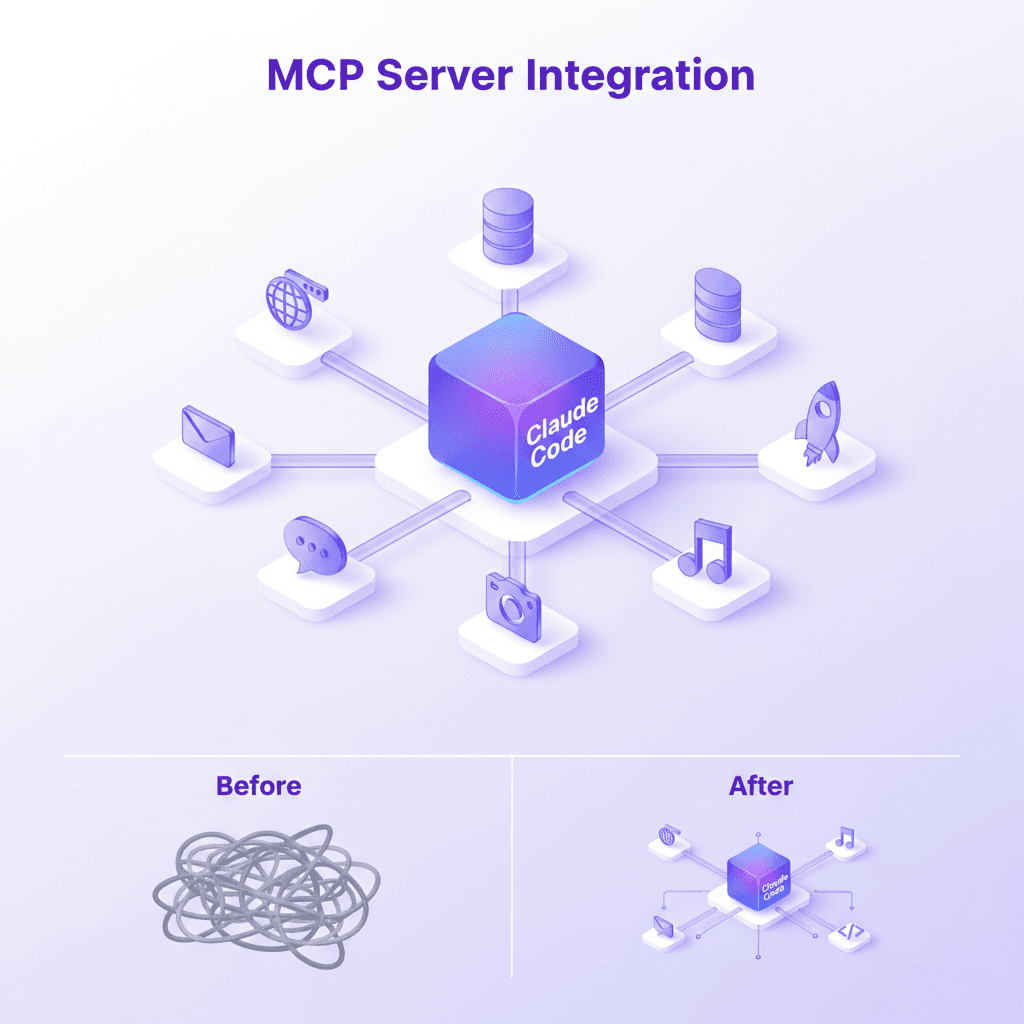
MCP Server Guide 2026: ClawHub, Smithery, and What to Install
MCP servers, registries, and the protocol connecting AI assistants to databases, APIs, browsers, and developer tools. Includes my 21-server production stack.
Read article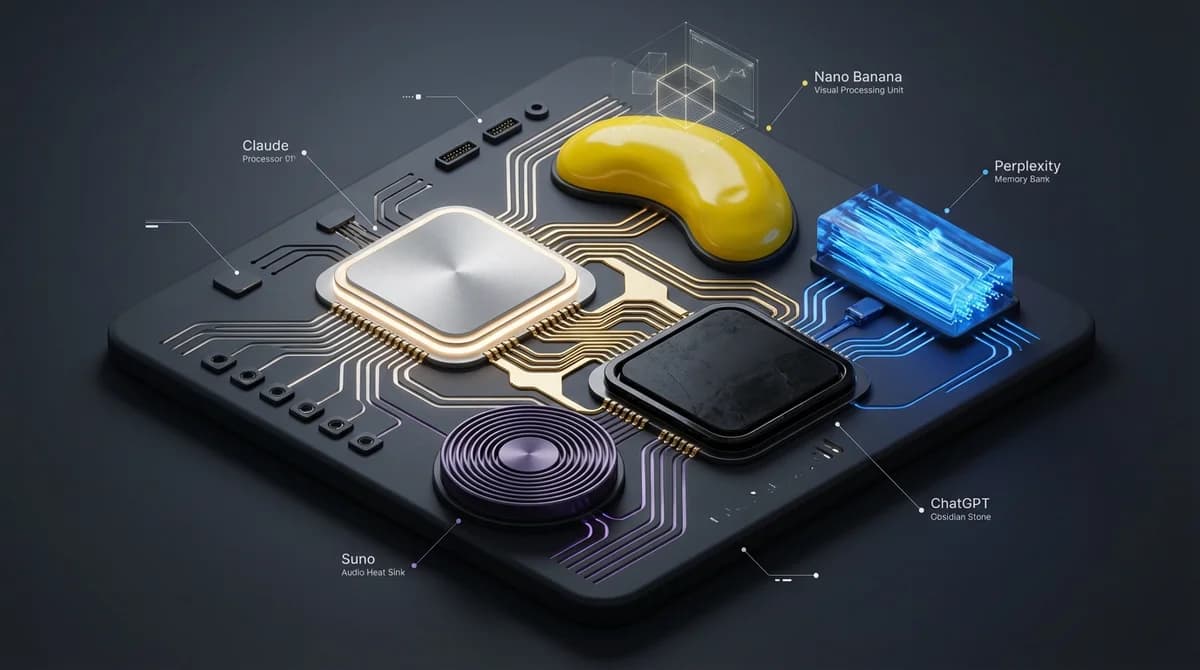
Creator Systems9 min read
My $100/Month AI Stack: Every Tool I Actually Use
The exact AI tools, subscriptions, and infrastructure I run to ship music, code, content, and products — with monthly costs broken down.
Read article
AI Architecture11 min read
The six primitives of an AI agent
Every AI agent is made of six primitives — model, tool, memory, loop, spec, and deploy. Learn them once and every new framework becomes a 30-minute exercise, not a month-long investment.
Read article