FrankX LibraryA New EarthEckhart Tolle
Contemporary teaching
A New Earth
Eckhart Tolle
Tolle extends his account of presence into a discussion of ego, identity, and human relationships.
2 min guideThe reading room
Find a book for the question you’re carrying. Follow a reading path through philosophy, spiritual traditions, creative work, and building a life of your own.
Six ways into the collection
Read the primary texts with their traditions and translations in view.
16 books · Explore collection
Yogananda, Michael Singer, and contemporary contemplative voices.
18 books · Explore collection
Taoism, Stoicism, and books that change the questions you ask.
15 books · Explore collection
The craft, friendships, and scenes behind work that lasts.
21 books · Explore collection
Focus, customers, money, and the decisions that shape a company.
13 books · Explore collection
Purpose and the small practices that give a life its shape.
24 books · Explore collection
80 books
Contemporary teaching
Eckhart Tolle
Tolle extends his account of presence into a discussion of ego, identity, and human relationships.
2 min guideSpiritual memoir
Paramahansa Yogananda
Yogananda’s account of his life, teachers, and spiritual search connects personal narrative with his presentation of yoga to a wider readership.
2 min guidePrimary text
Multiple Zoroastrian textual traditions
An entry into a Zoroastrian scriptural and liturgical corpus, beginning with selected Yasna material and the Gathas.
2 min guideSpiritual memoir
Ram Dass
An illustrated meeting of spiritual autobiography and practice, shaped by Ram Dass’s transformation and encounter with Indian devotional traditions.
2 min guideContemporary teaching
Michael A. Singer
A continuation of Singer’s teaching on awareness, emotional patterns, and the work of releasing inner resistance.
2 min guidePrimary text
Sikh Gurus and other devotional poets
The Sikh scripture, revered as the living Guru, brings together devotional compositions with a deep relationship to music and communal practice.
2 min guideModern commentary
Christopher D. Wallis
A modern introduction to the history and philosophy of Tantric traditions, useful for placing popular uses of the word Tantra in context.
2 min guidePrimary text
Umasvati
A systematic Jain work concerned with reality, the soul, karma, and liberation, available in English as That Which Is.
2 min guidePrimary text
Sayings of Confucius, compiled by followers
A collection of conversations and sayings concerned with ethical cultivation, learning, relationships, and government.
2 min guidePrimary text
Traditionally attributed to Vyasa
A dialogue between Krishna and Arjuna about action, knowledge, devotion, and liberation, situated within the Mahabharata.
2 min guidePrimary text
Multiple authors; Christian scriptural traditions
A collection of narrative, law, poetry, prophecy, Gospels, and letters. Read each genre on its own terms, with attention to its historical and religious setting.
2 min guidePrimary text
Teachings attributed to the Buddha
A Buddhist verse collection concerned with conduct, attention, suffering, and the path of practice.
2 min guidePrimary text
Mahayana Buddhist scripture
A short Perfection of Wisdom scripture centred on emptiness and the relation between form and emptiness.
2 min guidePrimary text
Bahá’u’lláh
Bahá’u’lláh’s book of laws, read within the Bahá’í Faith alongside supplementary texts, questions and answers, and explanatory notes.
2 min guideContemporary teaching
Thich Nhat Hanh
A Buddhist introduction to bringing attention into ordinary activities, with a gentle emphasis on everyday practice.
2 min guideContemporary teaching
Eckhart Tolle
Tolle’s teaching on presence examines identification with thought and the tendency to live through remembered pasts and imagined futures.
2 min guidePrimary text
Islamic scripture
The central scripture of Islam, received by Muslims as divine revelation in Arabic. Its recitation, ethical address, and theological claims belong together.
2 min guideSpiritual memoir
Michael A. Singer
Singer’s memoir describes how his practice of surrender developed through everyday decisions, community, and business life.
2 min guidePrimary text
Multiple authors; Jewish scriptural tradition
The Jewish Bible comprises Torah, Nevi’im (Prophets), and Ketuvim (Writings). Reading alongside commentary reveals a continuing tradition of argument and interpretation.
2 min guideContemporary teaching
Michael A. Singer
Singer invites readers to notice the inner voice and examine their relationship with thoughts, emotions, and resistance.
2 min guidePrimary text
Multiple teachers and textual traditions
A family of texts exploring self, ultimate reality, knowledge, and liberation through dialogues, stories, and instruction.
2 min guidePrimary text
Attributed to Patanjali
A compact classical account of yoga concerned with mind, practice, and liberation. Its scope extends well beyond physical postures.
2 min guidePrimary text
Anonymous; Shaiva Tantric tradition
A historical Shaiva Tantric dialogue presenting 112 contemplative practices within a religious understanding of awareness.
2 min guideContemporary teaching
Pema Chödrön
Contemplative reflections on meeting uncertainty and difficulty, grounded in Pema Chödrön’s Buddhist teaching.
2 min guideContemporary teaching
Michael A. Singer
The Time for Questions brings Singer’s teaching into a question-led format concerned with applying spiritual ideas to ordinary life.
2 min guidePrimary text
Zhuangzi and later contributors
A Daoist philosophical collection that uses stories, humour, paradox, and shifting perspectives to unsettle rigid judgments.
2 min guideReading field note
Ken Keyes Jr.
Keyes built a practical system for converting emotion-backed demands into preferences, then using every disturbance as diagnostic feedback. Its durable core is outcome-independent action: want intensely, love without coercion, act decisively, and require no result to certify your wholeness.
22 min guide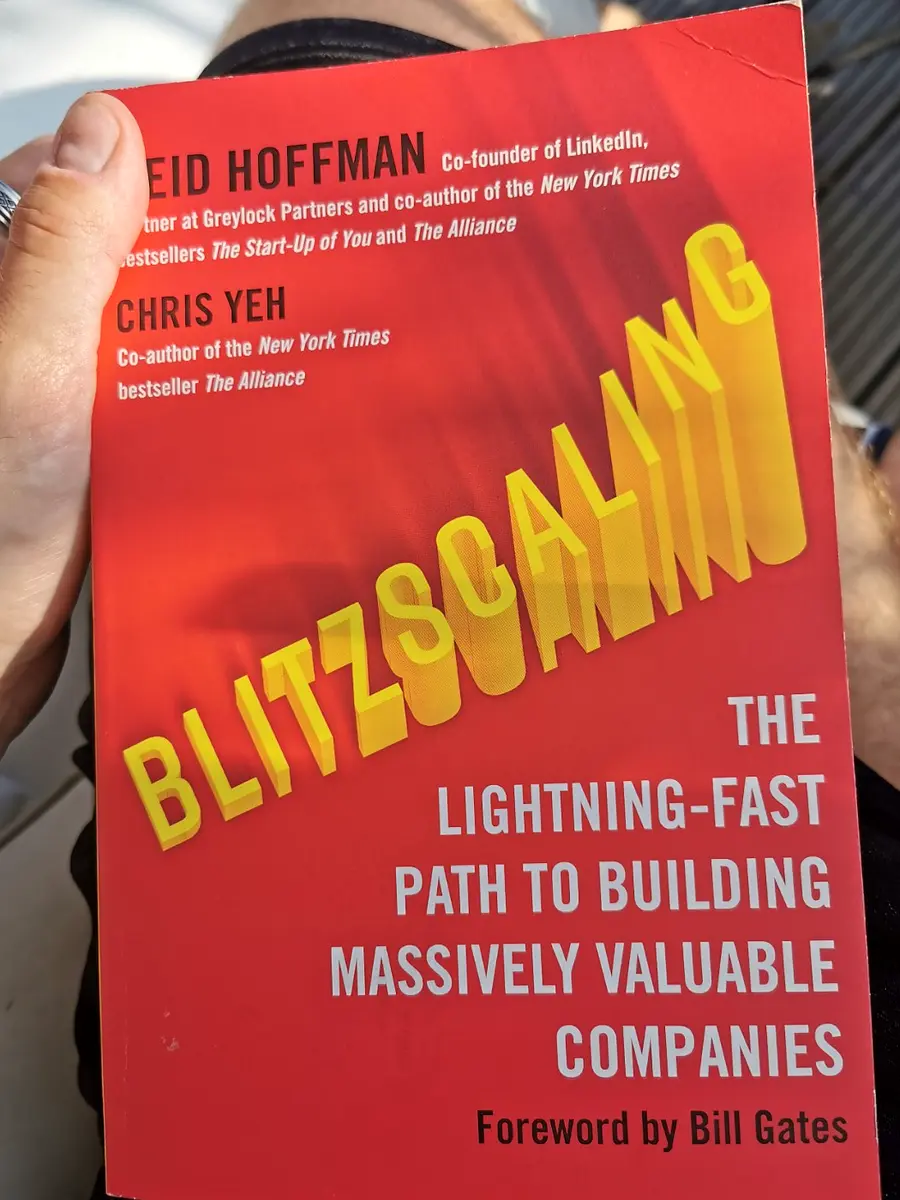
Reading field note
Reid Hoffman and Chris Yeh
This source-marked field note connects two pages of Blitzscaling: page 83 shows how an internal capability can become a platform, while page 152 argues for a small layer of generalists who can move into undefined work before a specialist hierarchy exists. Together they define a scaling sequence: build adaptable capacity, make the reliable parts reusable, then add management only where coordination has become a recurring constraint.
5 min guideBook review
Michael Diamond & Adam Horovitz
Mike D and Ad-Rock's sprawling, multi-format memoir of three NYC kids who moved from hardcore punk to hip-hop to genre-melting art-pop — told through alternating chapters, guest essays, a cookbook, mixtapes, and a graphic novel. Underneath the play it is an elegy for the late Adam “MCA” Yauch and an argument that friendship, not ambition, was the actual engine.
8 min guideBook review
Jeff Chang
The definitive history of how hip-hop culture formed — not as a music story but as a social one. Chang reads the four elements (DJing, MCing, graffiti, breaking) against the specific policy and geography that made them necessary: a South Bronx hollowed out by highway construction, arson, and disinvestment. Winner of the American Book Award, with an introduction by DJ Kool Herc.
8 min guideBook review
Bob Dylan
Dylan's memoir is built around three pivotal windows, not a whole life: arriving in Greenwich Village's folk scene in the winter of 1961, making New Morning (1970) amid the backlash of being cast as “spokesman of a generation,” and the 1989 New Orleans sessions that became Oh Mercy. It skips the mid-60s peak entirely in favor of vivid, close-focus prose on craft, influence, and the deliberate construction of an identity.
7 min guideBook review
Kim Gordon
Kim Gordon co-founded Sonic Youth in 1981 as a visual artist first, and Girl in a Band reads that way: art-school thinking applied to a rock band, a clear-eyed lens on the No Wave / downtown-NYC scene, and — bookending it all — the 2011 collapse of her thirty-year marriage to Thurston Moore. Structured as short, fragmentary chapters that open at the end and work backward.
7 min guideBook review
Patti Smith
Patti Smith's second memoir is Just Kids turned inward: not a career narrative but a map of a creative consciousness at rest and at work. Organized around cafés, objects, journeys, reading, and grief for her late husband Fred “Sonic” Smith, it argues that presence is built from small repeated acts — the same table, the same coffee, the same attention — not from big moments.
7 min guideBook review
Michael Azerrad
Thirteen American underground bands, 1981–1991, told one chapter each — Black Flag, the Minutemen, Hüsker Dü, Sonic Youth, Big Black, Fugazi, and more. The through-line is not the music but the infrastructure: how bands with no mainstream traction built their own labels, booking networks, and press before anyone gave them permission, and in doing so laid the tracks the 1990s ran on.
8 min guide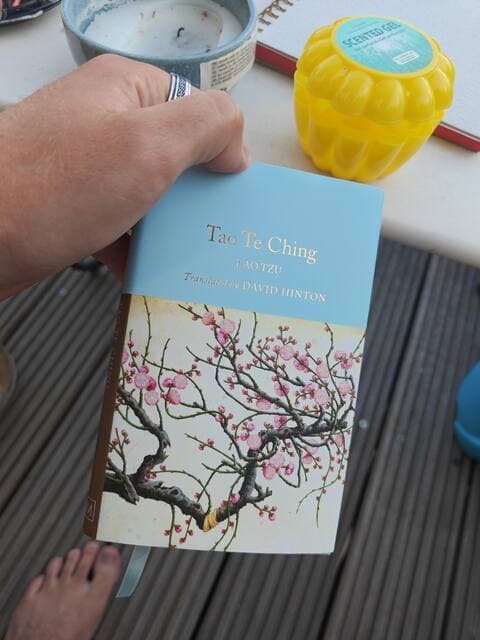
Primary text
Lao Tzu
The Tao Te Ching is a compact study of non-forcing: create the conditions, remove the excess, and let the essential work move. Its value for builders is not withdrawal from ambition, but ambition with enough internal and operational space to last.
6 min guideBook review
David Bayles and Ted Orland
A short, unsentimental book about why people stop making art — and why almost none of the reasons are talent. Written by two working artists, it is less about technique than about the fears, doubts, and quiet abandonments that end most creative lives. Its famous ceramics-class parable — the group graded on quantity outproducing the group graded on quality — is the single clearest argument for making a lot before judging yourself.
5 min guideBook review
Anne Lamott
A warm, funny, honest book on writing that doubles as a book on living. Lamott's enduring gifts are the permission to write terrible first drafts and the title metaphor — when a task feels overwhelming, you take it bird by bird, one small piece at a time. It is the classic argument that the work is made in revision and that perfectionism is the enemy of finishing.
6 min guideBook review
Austin Kleon
A brief, illustrated manifesto arguing that nothing is original and that the way to find your voice is to collect, combine, and transform your influences rather than wait for a bolt of pure originality. Kleon reframes influence as the raw material of art and gives permission to openly build on what you love — the antidote to the paralysis of trying to be wholly new.
4 min guide
Book review
Frank
The Book of Secrets names the twelve plain truths every working maker learns too late — the blank page, volume, the taste gap, constraints, stealing, the edit, showing up, standards, finishing, shipping, the long game, and the making itself. It is the craft companion to The Wordless Laws: where that book conceals the forces of how a life is made, this one reveals the forces of how great work is made, openly and at the start, where they can still save you the decade.
6 min guideBook review
Daniel Goleman and Richard Davidson
A methodical audit of meditation research by two scientists who have studied it for 50 years combined. Goleman and Davidson separate what the data actually shows (reduced amygdala reactivity, sustained attention gains, structural brain changes with long practice) from overclaimed benefits, and define what "deep practice" looks like compared to the light doses most apps deliver.
7 min guideBook review
Lynne McTaggart
McTaggart ran thousands of controlled intention experiments online and in live groups, finding that small groups of eight people focusing a healing intention for ten minutes show measurable physiological effects in the target — and unexpected healing effects in the senders. The evidence is preliminary but the documentation is unusually rigorous for the genre.
6 min guideBook review
James Nestor
Nestor investigates how modern humans breathe badly — too fast, too much, through the mouth — and what fixing it does to health, sleep, and stress. Part history, part self-experiment, part science reporting, the book makes the case that how you breathe may matter as much as what you eat or how you exercise.
7 min guideBook review
Pam Grout
Grout reframes manifestation as a lab experiment: nine short, time-boxed tests you run on yourself in 48 hours or less, each designed to give you firsthand evidence that attention and expectation shape what shows up. The pitch is "don't believe me, prove it" — treat the universe like a science fair partner and watch for the result.
6 min guideBook review
Rhonda Byrne
Byrne packages the "law of attraction" — like attracts like — into a single three-step loop: ask, believe, receive. The book argues that focused thought, gratitude, and visualization summon matching circumstances, and it became the cultural on-ramp through which millions met manifestation.
6 min guideBook review
Frank
The Wordless Laws shows twelve forces at work without ever naming them — they live in the story, the imagery, and the structure, so the reader discovers each law rather than being handed a list. The concealment is deliberate: a principle you excavate yourself sticks far harder than one you are told. It pairs with a forthcoming Book Two that finally names the forces, turning the pair into a discover-then-confirm sequence.
6 min guideBook review
David Byrne
David Byrne’s central argument is "creation in reverse": music is not born from pure inspiration and then performed in a space — the space, technology, and economics come first, and the music adapts to fit them. Part Talking Heads memoir, part cultural history, part unusually honest music-business manual, it makes the case that context shapes art and rooms create behavior.
8 min guideBook review
Patti Smith
Patti Smith’s memoir of her decade with Robert Mapplethorpe — from meeting in Brooklyn in 1967 to his death in 1989 — is the sacred-bohemian counterweight to the macho rockstar myth. Two people with no money, no reputation, and no scene make themselves into major figures through work, devotion to each other, and immersion in New York at its most fertile. Winner of the 2010 National Book Award for Nonfiction.
7 min guideBook review
Keith Richards
Keith Richards’ memoir (with James Fox) is the immersion text for loose-but-mythic rockstar energy — but underneath the legend it is a serious musician talking seriously about craft. The through-line is total, lifelong submission to a sound: how the blues colonized a suburban English kid and became the organizing principle of an entire life, attitude, and silhouette.
8 min guideBook review
Lizzy Goodman
An oral history assembled from 200+ interviews, tracing the NYC indie rock revival of 2001–2011 — the Strokes, Yeah Yeah Yeahs, Interpol, LCD Soundsystem, and the Brooklyn wave — entirely in the words of the people who lived it. It documents one of the last scenes to form before the internet made geography irrelevant to music discovery: scenius in real time, and its dissolution.
8 min guideBook review
Miles Davis with Quincy Troupe
Miles Davis’s blunt firsthand account of six decades reshaping American music — from East St. Louis to bebop, the Birth of the Cool, Kind of Blue, and electric fusion — told in his own profane, unguarded voice through Quincy Troupe’s recorded interviews. Less a jazz history than a treatise on originality as a survival strategy. Winner of the 1990 American Book Award.
8 min guideBook review
Legs McNeil & Gillian McCain
The first and definitive oral history of American punk, assembled entirely from firsthand interviews with no authorial narration. It traces the music from the Velvet Underground and Warhol’s Factory through the Stooges and MC5, the New York Dolls, and CBGB’s Ramones-and-Television scene. A document of velocity, attitude, and scene mutation — with self-destruction shown as the unflinching cost, not a romance.
8 min guideBook review
Andy Warhol & Pat Hackett
Andy Warhol’s firsthand, year-by-year memoir of New York’s pop-art decade, co-written with Pat Hackett. From the founding of the silver Factory through the Velvet Underground and the rise and fall of the Warhol superstars to the 1968 shooting that ended the open-door era. A study in persona, scene-building, and fame engineered as a deliberate system.
7 min guideBook review
Rick Rubin
Rick Rubin’s first book is the inner-state manual for the collection: not "make content" but how to be tuned enough that creation passes through you. Across 78 short meditations he argues the quality of your art is a direct function of the quality of your attention — and that your lifestyle should make you more receptive, not merely more stimulated. Draws on Zen and Taoist frames without citing them.
7 min guide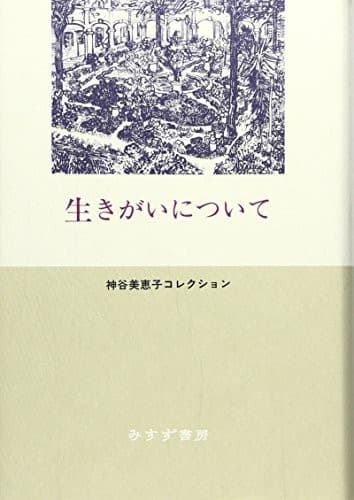
Book review
Mieko Kamiya
The foundational psychiatric study of ikigai — published in Japanese in 1966, still largely untranslated. Kamiya was a psychiatrist at the Nagashima Aiseien leprosarium in Okayama; she watched patients whose external lives had been forcibly stripped reconstruct a reason to wake up, and built a clinical theory from what she observed. Forty years before the West translated her work, she had already named the distinction between ikigai-no-taishō (the object that gives meaning) and ikigai-kan (the felt sense of having meaning).
5 min guide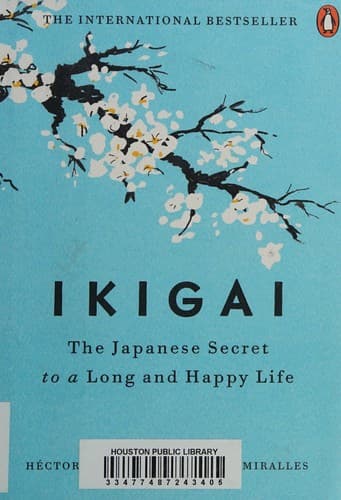
Book review
Héctor García & Francesc Miralles
Two Spanish authors — a Tokyo-resident software engineer and a Barcelona-based novelist — travel to Ogimi, the Okinawan "village of longevity," and interview its centenarians about why they live so long and stay so engaged. The book is the one responsible for ikigai's global pop-culture moment (3M+ copies, 60+ languages). It is a useful entry, especially for the Ogimi village fieldwork, but it also imports the 2014 four-circle Venn as if it were Japanese — which it is not. Read for the Okinawan voices, hold the Venn loosely.
6 min guide
Book review
Dan Buettner
A National Geographic explorer identifies five regions on Earth where people consistently reach a hundred with the cognition of a sixty-year-old — Sardinia, Okinawa, Nicoya, Ikaria, Loma Linda — and reverse-engineers nine practices common to all five. The 2005 NatGeo cover story put the Japanese word "ikigai" on Western newsstands for the first time. The book is the field-work argument that longevity is structural, not heroic — built into how people eat, move, belong, and answer the question of what to do today.
7 min guideBook review
Ken Mogi
A Japanese neuroscientist (Sony Computer Science Laboratories) writes the explicitly Japanese-native antidote to the four-circle Venn. Mogi offers Five Pillars — start small, release yourself, harmony & sustainability, joy of little things, be in the here and now — and treats ikigai as a daily-meaning practice, not a career-optimization puzzle. The closest English-language proxy to Kamiya's 1966 clinical thinking, written with neuroscience and Zen sensibilities in roughly equal measure.
5 min guideBook review
Richard C. Schwartz
Schwartz, the founder of Internal Family Systems, makes the case that the mind is not one voice — it is a system of parts (managers, firefighters, exiles) governed by a Self with eight leadership qualities. There are no bad parts, only burdened ones. The model is one of the cleanest available frameworks for personal development, leadership, and (in our extension) for designing self-led AI architectures.
7 min guide
Book review
Tony Robbins
Robbins's 500-page magnum opus and the foundation for nearly every modern motivational system that followed. Synthesizes NLP, behavioral psychology, decision-theory, and his own "Neuro-Associative Conditioning" into a single self-improvement architecture. The argument: master the meanings you assign, the questions you ask, the metaphors you live by, and you control the trajectory of your life.
8 min guide
Book review
Joe Dispenza
Dispenza's synthesis of neuroscience, quantum field theory, energy psychology, and meditation practice. The thesis: ordinary humans can deliberately access "supernatural" states — coherent brainwaves, healed bodies, expanded perception — via specific, repeatable meditation protocols. Heavy on case studies; selectively backed by HeartMath and EEG measurements; controversial in mainstream physics.
8 min guide
Book review
Joe Dispenza
Dispenza's foundational text — the neuroscience case that personality is repeated thoughts and emotions, and that personality can be deliberately rewired. The first half is the science (neuroplasticity, conditioned response, gene expression); the second half is a four-week meditation protocol. Less metaphysical than his later books, more directly applicable.
7 min guide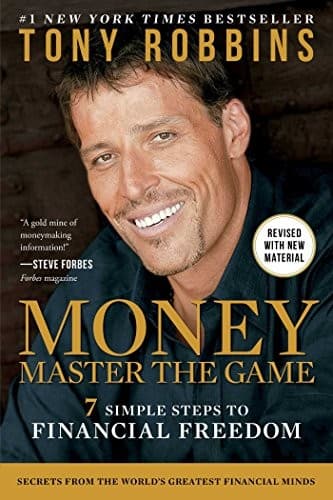
Book review
Tony Robbins
Robbins interviews Ray Dalio, Carl Icahn, Warren Buffett, John Bogle, David Swensen and ~50 other top investors and synthesizes their patterns into a personal-finance system for ordinary readers. The thesis: index funds + asset allocation + tax efficiency + behavioral discipline beats almost everything else over a lifetime. Long, repetitive, pitchy in places — but the core financial guidance is sound and free.
9 min guide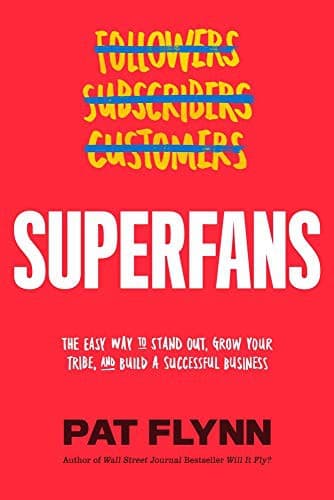
Book review
Pat Flynn
Flynn's framework for turning casual followers into evangelistic superfans. The thesis: 1,000 superfans are worth more than 100,000 lukewarm followers, and you build them deliberately by progressing audiences up a ladder of engagement — from active audience to connected community to superfans. Practical, friendly, structurally simple. The book's Pyramid of Fandom is the visual readers most often re-cite.
6 min guide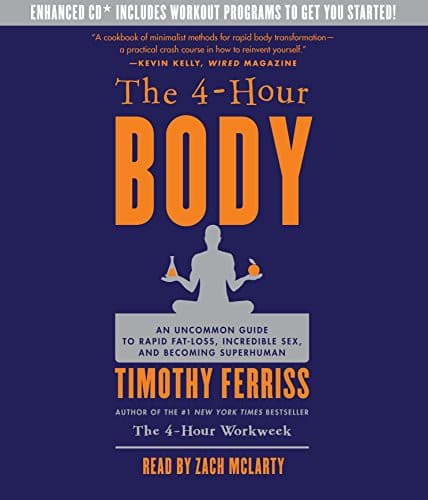
Book review
Tim Ferriss
Ferriss applies his 80/20 lifestyle-design lens to the human body — fat loss, muscle gain, sleep, sex, sport. Rather than write a comprehensive textbook, he delivers minimum-effective-dose protocols for each domain. Some claims (slow-carb diet, Occam protocol) are well-supported; others (cold thermogenesis, ice-bath weight loss) are speculative. The 80/20 framework is the contribution; treat specific protocols as hypotheses.
8 min guide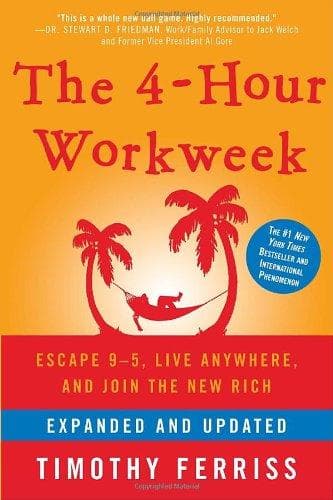
Book review
Tim Ferriss
The book that named "lifestyle design" and made escaping the 9-to-5 mainstream. Ferriss's DEAL framework — Definition, Elimination, Automation, Liberation — is a sequenced playbook for replacing time-for-money trades with location-independent income, automation, and "mini-retirements" instead of one terminal retirement. Some examples are dated; the operating principles aged surprisingly well.
8 min guide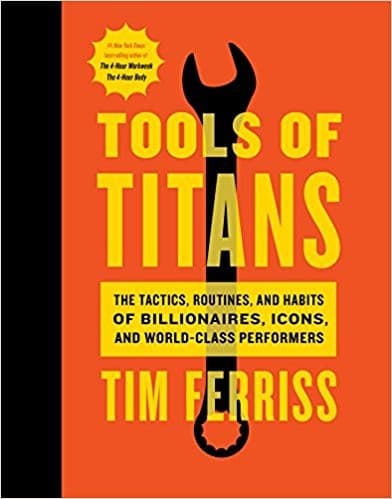
Book review
Tim Ferriss
Ferriss distills 200+ podcast interviews with world-class performers into a single 700-page reference book. Organized into three parts — Healthy, Wealthy, Wise — each profile is 5-15 pages of the guest's most useful tools, routines, beliefs, and recommendations. Not a book to read straight through. A book to keep on the desk and open at any page when you need a different angle on a problem.
10 min guide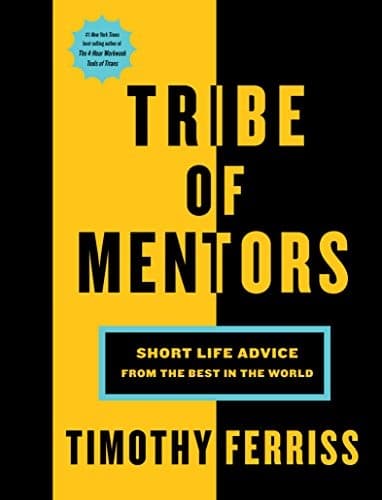
Book review
Tim Ferriss
Ferriss sends 11 questions to 130+ world-class performers and prints their unedited responses. Less depth than Tools of Titans; vastly more breadth. The format reveals patterns invisible at single-interview resolution — what books almost everyone recommends, what the most-cited failures-turned-into-wins were, which "morning routines" actually look the same.
10 min guide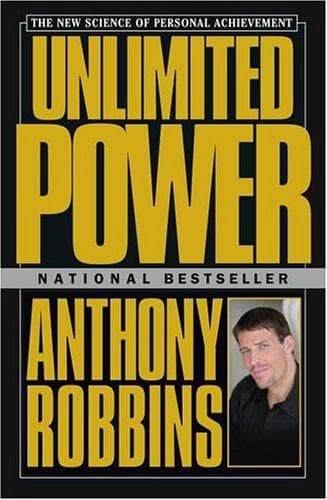
Book review
Tony Robbins
Robbins's first book and the book that put NLP into the mainstream. Centers on modeling — the principle that any human excellence can be reverse-engineered and replicated by studying the specific mental, physical, and linguistic strategies of those who already have it. The Ultimate Success Formula is the spine: know your outcome, take action, develop sensory acuity, change approach until you succeed.
7 min guide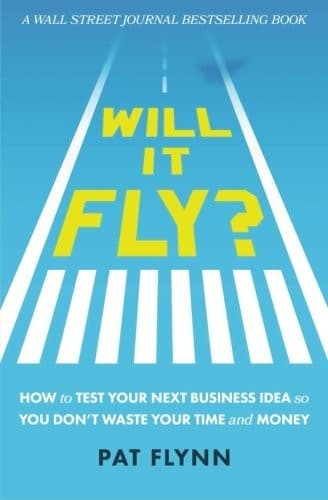
Book review
Pat Flynn
Flynn's structured, friendly playbook for testing a business idea before committing to it. Five parts: mission design, development lab, flight planning, flight simulator (validation), and the actual launch. Most useful chapter is the "Place Your Bets" section — a series of escalating tests that surface the truth about whether real customers will pay before you build anything substantial.
7 min guide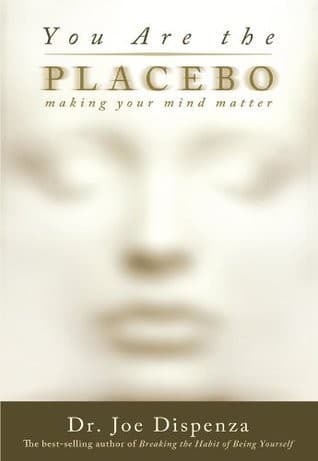
Book review
Joe Dispenza
The most empirically defensible Dispenza book. Documents the long, well-replicated history of the placebo effect — surgical, pharmacological, prognostic — and argues we can self-administer it deliberately. The first half is mainstream medical literature; the second half is a meditation protocol designed to trigger placebo-style healing without the deception.
7 min guide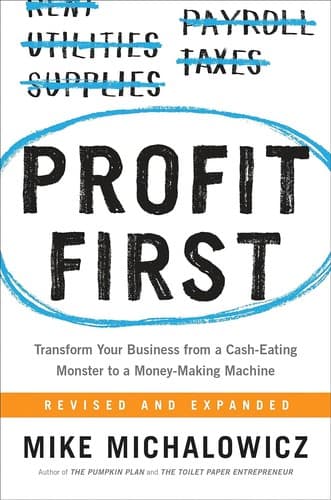
Book review
Mike Michalowicz
Profit First inverts the GAAP formula (Sales − Expenses = Profit) into Sales − Profit = Expenses. By routing every deposit through five dedicated bank accounts before expenses are paid, Michalowicz forces small businesses to become profitable today rather than "eventually."
6 min guide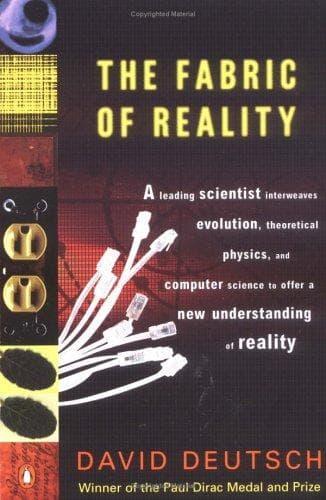
Book review
David Deutsch
Deutsch argues that reality is best understood as the intersection of four strands — quantum physics (many-worlds), the theory of computation, epistemology (Popper), and evolution. Together they form a Theory of Everything in which the multiverse is literal, knowledge is physical, and problems are soluble.
8 min guide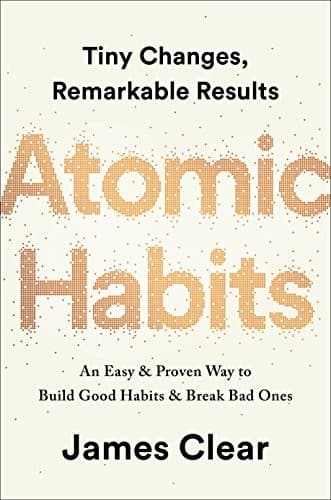
Book review
James Clear
Clear argues that habits compound like money — one percent better every day yields a 37× improvement in a year. The mechanism is not willpower; it is a four-law loop (make it obvious, attractive, easy, satisfying) applied through identity, environment, and systems, not goals.
6 min guide
Book review
David Goggins
Part autobiography of a Navy SEAL / Army Ranger / ultramarathoner who weighed 297 lbs at 24, part operating manual for deliberate suffering as a life strategy. Goggins argues mental toughness is not a trait but a trained response — you callus the mind the way you callus hands. Unpleasant. Effective.
6 min guide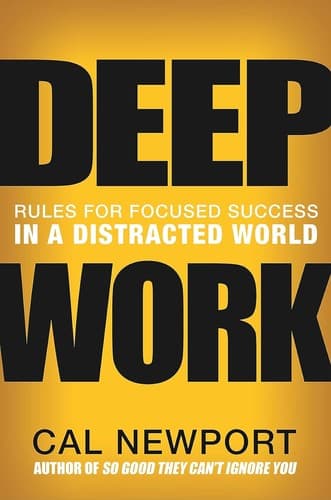
Book review
Cal Newport
Newport argues that the ability to focus without distraction on cognitively demanding work is becoming both increasingly rare and increasingly valuable — the defining skill of the knowledge economy. Part manifesto, part operating manual: four rules for actually doing deep work in a world engineered to prevent it.
7 min guide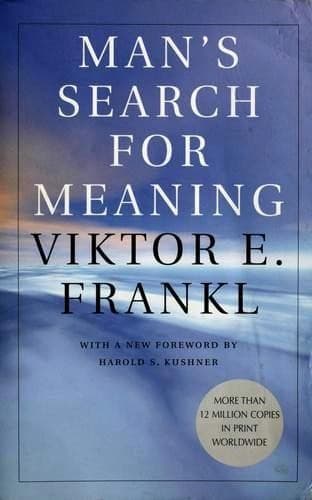
Book review
Viktor E. Frankl
A psychiatrist's account of surviving Auschwitz and three other Nazi camps, and the school of psychotherapy — Logotherapy — he built from what he learned there. The argument: meaning, not pleasure, is the primary human drive, and access to meaning is what determines whether a person survives impossible conditions. One of the most cited books of the 20th century.
6 min guide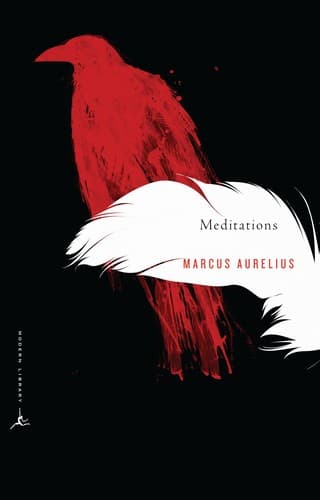
Book review
Marcus Aurelius
The private notebook of a Roman emperor working out how to live well under the hardest conditions of his time. Twelve "books" of aphorisms on control, duty, mortality, and perception — not a treatise for publication, but a man arguing with himself in ink. The most practical philosophy ever written.
7 min guide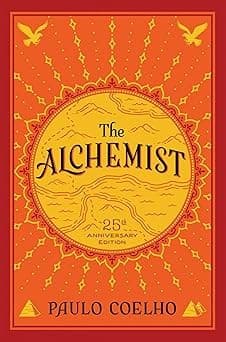
Book review
Paulo Coelho
A shepherd named Santiago leaves everything he knows to chase a recurring dream of treasure at the Pyramids. The novel is ostensibly about the journey; it is actually a parable about how purpose, attention, and the willingness to begin shape reality. Short, simple, often life-redirecting.
5 min guide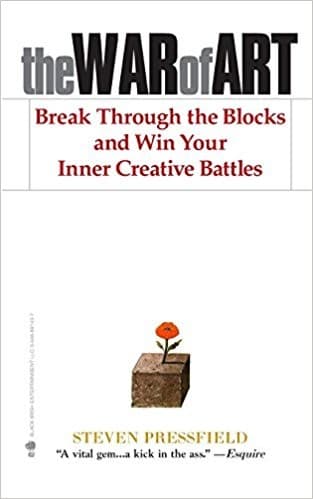
Book review
Steven Pressfield
Pressfield names the enemy every creator faces — Resistance, with a capital R — as a universal, personified, implacable force that opposes any work that requires us to grow. Short chapters, almost koans. The book itself is an act of defiance against Resistance, demonstrating its own argument.
5 min guide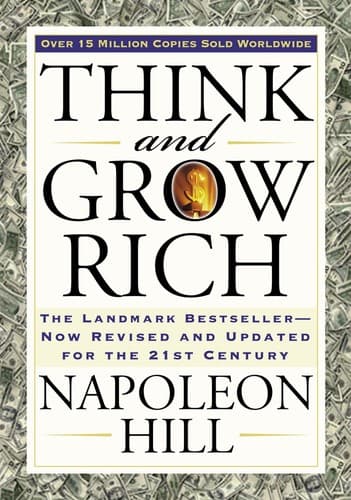
Book review
Napoleon Hill
Napoleon Hill's 1937 synthesis of interviews with Andrew Carnegie, Thomas Edison, Henry Ford, and ~500 other wealthy Americans. Hill extracts 13 "steps" — a philosophy of definite-purpose, auto-suggestion, mastermind collaboration, and persistence. Uneven, often mystical, still foundational for every self-development book that followed.
7 min guideSome of the books in this library are not just reading recommendations — they are sources for deep research articles. Where four library books cluster around one idea, you can read the meta-article that synthesises them.
Blue Zones · Ikigai · AI Era
Kamiya (1966), Buettner (2005), García & Miralles (2016), Mogi (2017) — the lineage of ikigai from psychiatric foundation to global bestseller, with an honest reckoning of the 2014 Western Venn. 12-minute read.
Some of these sources changed how I build, teach, and create. My books turn that reading into original frameworks, with the influences kept visible.
Explore FrankX books