01
Assisted Work
A human drives the workflow. AI drafts, summarizes, explains, and suggests next steps.
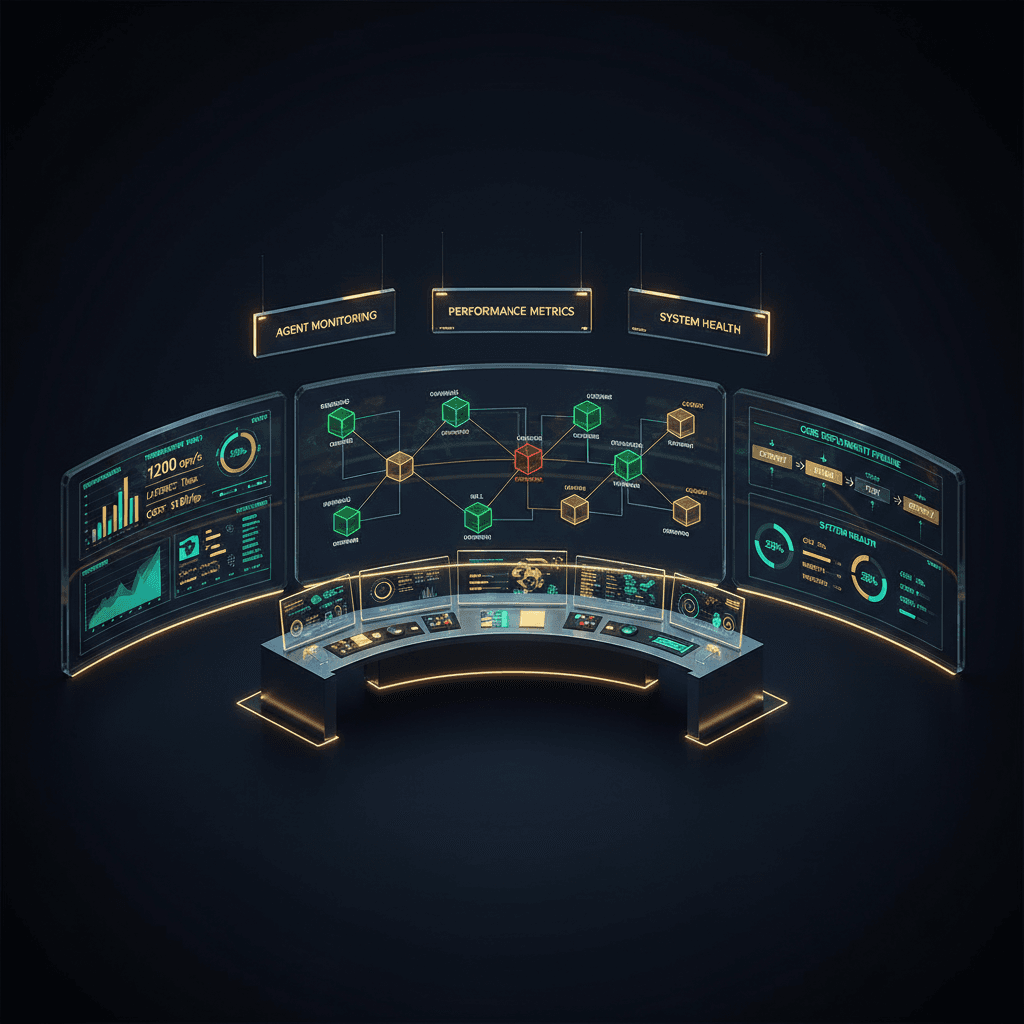
Agentic AI Center
This is the FrankX hub for agentic AI: how agents work, where they fail, how to design them, and how to move from experiments to production-grade operating systems.
Systems that can interpret a goal, plan the work, call tools, inspect results, and keep moving under constraints.
The controlled actions an agent can take: search, retrieval, code execution, browser work, database operations, and APIs.
The working context, project history, user preferences, and long-lived knowledge that make an agent useful beyond one prompt.
The routing layer that decides which agent acts, when work escalates, and how outputs are checked before they matter.
Maturity Model
Most failures come from skipping levels: giving broad autonomy before the workflow, tools, memory, and review model are ready.
A human drives the workflow. AI drafts, summarizes, explains, and suggests next steps.
The agent can read, write, search, run commands, and complete bounded tasks with review.
The system owns a repeatable business or creator workflow with logs, checkpoints, and handoffs.
Multiple roles collaborate: planner, researcher, builder, reviewer, operator, and evaluator.
Agents sit inside a durable system with memory, governance, observability, deployment, and improvement loops.
Build Path
The center is organized around a practical path: choose a workflow, design the system, set the operating model, then ship a constrained version.
Choose one workflow where the desired output, review criteria, and failure cost are clear.
Separate planning, retrieval, tools, memory, evaluation, permissions, and human review.
Decide who owns prompts, data, approvals, release quality, incident handling, and continuous improvement.
Build the smallest useful agent, add logs, test real edge cases, and expand only after the workflow proves itself.
Resource Map
Definitions, mental models, and the difference between chat, automation, and real agent behavior.
Where agentic systems are going across tools, protocols, orchestration, and enterprise adoption.
When to use agents, when not to, and how to reason about maturity before implementation.
Patterns for routing work across multiple agents, tools, evaluators, and review steps.
The Agentic Creator OS as a practical reference system for agent teams, skills, and workflows.
Move from idea to implementation with diagrams, templates, and production patterns.
Guardrails
Agentic systems are only useful when the actions, permissions, memory, and review moments are explicit. The goal is not more autonomy. The goal is accountable execution.
Give agents narrow tools before broad autonomy.
Log plans, tool calls, outputs, and review decisions.
Keep humans accountable for high-impact actions.
Use evaluation before scale, not after failure.
Treat memory as product infrastructure, not a chat feature.
Design rollback, permissions, and escalation from the start.
FAQ
Agentic AI refers to AI systems that can pursue a goal through multiple steps: planning, using tools, reading context, checking results, and adapting their next action.
The Agentic AI Center explains the field and organizes the learning path. AI Architecture is the deeper implementation layer for blueprints, prototypes, tools, and production designs.
Use an agent when the work requires context, branching decisions, tool use, and repeated judgment. If the process is fixed and deterministic, traditional automation is usually simpler.
Start with a bounded workflow, limited permissions, visible logs, human review, and a clear definition of done. Expand autonomy only after the system is observable and reliable.
When a new architecture guide, orchestration pattern, or governance checklist lands in this hub, one email goes out with what changed and why it matters.