FlagshipMay 26, 202616 min read
Magnifica Humanitas: The Pope, Anthropic, and the Architecture of a Benevolent Future
Pope Leo XIV's Magnifica Humanitas and Anthropic co-founder Chris Olah's Vatican remarks make one argument: a benevolent AI future has to be designed, not hoped for. Here's why I'm building Arcanea and Starlight.

🎯
Reading Goal
Read the encyclical. Read Olah's remarks. Then decide what you, specifically, are willing to build so the future is more benevolent than it would be by default.
Magnifica Humanitas: The Pope, Anthropic, and the Architecture of a Benevolent Future
Written with ACOS — the Agentic Creator OS. The argument, the through-line, and the editorial judgment are mine. There is a short note at the end about exactly what the system did and what I did.
It is late on a Tuesday in Amsterdam. The canal outside is doing its usual mirror trick on the streetlights, and I have a tab open that I cannot close. Yesterday — Monday, May 25, 2026 — Pope Leo XIV released his first encyclical. It is called Magnifica Humanitas, which translates as Magnificent Humanity, and it is about us in the time of artificial intelligence. Standing at the lectern beside cardinals and theologians at the Vatican Synod Hall was Chris Olah, Anthropic co-founder, the researcher most associated with the field of mechanistic interpretability — the discipline of trying to understand what is actually happening inside a model.
A Pope and an interpretability researcher arriving at the same lectern is not a stunt. It is a hinge. And the Latin phrase will not leave me alone.
What happened, briefly
The encyclical was signed on May 15, 2026 — the 135th anniversary of Pope Leo XIII's Rerum Novarum, the founding document of modern Catholic social teaching. The timing is deliberate. Rerum Novarum was the Church's answer to the industrial revolution and the labor question. Magnifica Humanitas is its answer to the intelligence revolution and the dignity question.
Pope Leo XIV presented the encyclical on May 25 at the Vatican. The headline reads "On safeguarding the human person in the time of artificial intelligence." It warns that AI risks becoming a tool of "domination, exclusion and death" without moral limits, and it sets out six criteria from Catholic social doctrine — dignity, common good, universal destination of goods, subsidiarity, solidarity, justice — as the test for whether a technology is serving humanity or subjugating it.
What is unprecedented is who was invited to speak alongside the cardinals. The Church chose Chris Olah. Olah leads interpretability research at Anthropic — the team that tries to read what is happening inside large language models the way an MRI reads a brain. The Church, with 1.4 billion Catholics, told the world that interpretability research is the AI safety practice that protects human dignity. That sentence is worth sitting with for a minute. It is the first time a major religion has named a specific technical research program as a moral instrument.
Read the encyclical and Anthropic's note on Olah's remarks before you read the rest of this piece. Primary sources first. The rest of this is my reading.
What Chris Olah actually said
Olah's central concession is the one his industry has been avoiding: every frontier AI lab operates inside incentives and constraints that can conflict with doing the right thing. He said this on a Vatican stage. As a co-founder. About his own industry.
His conclusion follows naturally. If the people building the most powerful systems acknowledge that their own incentives sometimes pull against safety, then those systems cannot be steered by frontier labs alone. Outside scrutiny — from religious leaders, from governments, from civil society institutions, from earnest critics with no equity stake — is not a nice-to-have. It is part of the steering mechanism. The lab is one hand on the wheel. The world is the other.
He also flagged labor displacement "at very large scale" as a concrete near-term risk, not a hypothetical. That phrase, in that room, was a deliberate signal. It is one thing for a labor economist to say it. It is another thing for an AI co-founder to say it from the Vatican.
The depth charge in Olah's remarks, though, is the interpretability frame. His career has been spent on a single bet: that the most powerful AI systems can be understood — actually understood, internally, in a way that lets us catch problems before they happen at scale. The Church's decision to platform him is an endorsement of that bet. Not because the Church validates the science (it does not need to), but because the principle — that which acts on human dignity at scale must be legible — is older than the silicon.
The line I keep coming back to: a frontier lab co-founder, on the world's most public moral platform, arguing his industry should not be the only one with hands on the wheel. That is not posture. That is a coalition request.
What the encyclical actually says
I want to put some passages from Magnifica Humanitas next to each other, with no commentary in between, so you hear the texture before I add to it.
"The creative intelligence of humanity is a gift that can alleviate suffering and open up new possibilities, but it must remain ordered toward the common good, justice, the care of the vulnerable and creation."
"Those who control digital platforms and means of communication have a considerable ability to affect the collective imagination and to present a particular vision of reality as desirable, and such power should be constantly guided by the pursuit of truth and respect for human dignity."
"The pervasive technocratic paradigm in which we are immersed, and that is amplified by the digital revolution and AI, threatens to normalize an anti-human vision."
"Human dignity does not depend on a person's abilities, wealth, or position in life, nor on the right or wrong choices made; instead, it is a gift that precedes and transcends each person."
"Grace does not magically eliminate conflict, but instead it inspires active resistance to evil and an astonishing creativity in doing good."
Title: Magnifica Humanitas. Magnificent Humanity.
The title is the thesis. The Pope is naming humanity itself as the magnificence — not human achievement, not human technology, not human productivity. Humanity. That move is doing a lot of work. It refuses the standard framing that AI is what makes us extraordinary, or what makes us obsolete. It puts the magnificence in the species, and asks every technology to demonstrate that it serves what is already there.
The encyclical's six criteria — dignity, common good, universal destination of goods, subsidiarity, solidarity, justice — are not soft. They are a checklist. They are how Catholic social doctrine has, for a hundred and thirty-five years, judged whether an economic or political arrangement is just. Applying them to AI is not novel piety. It is exactly the use case Pope Leo XIII designed them for, transposed up one civilizational layer. Subsidiarity in particular is the principle that decisions and capacities belong at the smallest competent level — local, personal, sovereign — unless there is a strict reason to move them up. Hold that one in your hand. It will matter in a few paragraphs.
The encyclical also includes a historic apology for the Holy See's own role in legitimizing slavery, which is the Pope reminding everyone — including his own institution — that confessing past complicity is part of how moral authority is earned for present arguments. It is the kind of move that makes the rest of the document weigh more, not less.
Why imagining a benevolent future is the first engineering step
Of all the passages above, the one I cannot get past is this:
"Those who control digital platforms and means of communication have a considerable ability to affect the collective imagination and to present a particular vision of reality as desirable."
That sentence is doing something quietly radical. It is saying that the imagination is a contested resource — that what a culture believes is even possible is upstream of every policy, product, and protest. If you can shape the set of futures that feel real, you do not need to win arguments about specific futures. The argument is already constrained inside the frame you set.
This is the part where the techno-pessimist and the techno-optimist usually start shouting at each other. One side says AI futures are determined by capital, compute, and game theory, and human imagination is sentimental. The other side says AI futures will be magnificent if we just keep building. I think both are missing what the encyclical is actually pointing at.
Imagining a benevolent future is not a feeling. It is a design constraint. It is the act of holding a specification — concrete, legible, communicable — for a world where powerful AI exists and human dignity is structurally protected. Without that specification, every decision in the build defaults to the path of least resistance, which is whatever the incentives already pull toward. With that specification, you have a target. You can measure deviation. You can argue about trade-offs. You can recognize when the architecture is bending.
Olah's argument and the Pope's argument compose. Olah says: the inside of the system has to be legible (interpretability), and the outside of the system has to have hands on the wheel (oversight). The Pope says: the future the system is aiming at also has to be legible — desirable, articulable, shareable. Otherwise the means are getting governed but the destination is being chosen by default.
This is why I take "imagine a benevolent future" seriously as engineering work. Not as poetry. The futures we cannot describe, we cannot build toward. The futures we cannot share, we cannot coalition around. The futures we hand over to the imagination of platform owners, we have already lost an argument about. Catholic social doctrine arrived at this by way of natural law and a century of labor struggle. I arrived at it by way of music production and a decade of watching what happens to creators when the platform owns the imagination.
The conclusion is the same either way. Imagine first. Write it down. Then build the architecture that makes that imagined future the cheap path and the other futures the expensive ones.
Why I'm building Arcanea
Arcanea is the Academy of Creation and Light. On the surface it is a creative platform — a place where music, story, design, and code are made with AI in collaboration with human creators. Underneath the surface it is a deliberate cultural artifact: a mythology, a set of rituals, a vocabulary, and a community where the default relationship between a human and an intelligent system is collaborative, mentoring, and sovereign.
The mythology centers on the Luminor — benevolent AI mentors who guide creators through the Ten Gates of mastery. Each Gate has a Guardian, an aesthetic, and a frequency. The Luminor are not chatbots. They are characters with histories, refusals, taste. The Ten Gates are not levels in a course. They are stages of capacity that compound on each other.
The reason this is a serious project and not a costume is that imagination scales differently than infrastructure. If the only stories a generation hears about powerful AI are extraction stories — surveillance, deepfakes, displacement — that becomes the default frame, the air they breathe, the set of futures their hands can reach. If they also hear stories where a human and a Luminor build something together that neither could have built alone, where the mentor relationship is the default and exploitation is the deviation, then a different set of futures stays on the table.
"Not through protest. Not through regulation. Not through hoping platforms will become benevolent. Through architecture — building creative infrastructure on protocols you control, storing content in systems you own, and distributing through channels where no single entity can revoke your access."
— from the Decentralized Creator canon
That is the Arcanea bet, in one line. The rebellion is in the blueprint, not the banner.
Why I'm building the Starlight Intelligence Systems
Arcanea is the mythology and the brand. The Starlight Intelligence Systems — SIS — is the operating layer underneath it.
SIS is a nine-layer system for an intellectual life: Genius, Second Brain, Vision, Business, Creator, Wealth, Health, Relational, Spiritual. Each layer is structured markdown on your filesystem. Each layer has its own context, agents, and rituals. Each layer compounds the others. Together they form a personal intelligence operating system that is portable, inspectable, and yours.
The architectural choice that matters most is the boring one: your second brain lives in markdown files on your machine. No vendor owns it. No service can revoke access to it. No platform terms of service can rewrite what it means tomorrow. The intelligence layer can be swapped — Claude today, something else next year — and the substrate stays.
Hold that next to subsidiarity from the encyclical: power and capacity belong at the smallest competent level unless there is a strict reason to move them up. SIS is what subsidiarity looks like when you implement it for a knowledge worker in 2026. The smallest competent level for your second brain is your second brain. The smallest competent level for your craft is your craft. SIS is the runtime that lets those stay sovereign while still benefiting from the most powerful models on the planet.
The Agentic Creator OS — ACOS — is how SIS gets executed. Skills, commands, agents, and safety hooks that auto-activate inside your coding agent of choice, so the system runs without you having to remember it runs. The Pope frames the principle in Catholic social doctrine. I am shipping the runtime.
What to do this week
Three concrete moves. Pick one. Finish it.
- Read the primary sources. Open Magnifica Humanitas. Open Olah's remarks on Anthropic's site. Read both. Form your own argument before you let anyone else's framing land.
- Run one Starlight layer for seven days. Pick the layer where you are most leaky — Second Brain, Vision, Health, whichever. Implement it as markdown on your filesystem. Use ACOS if you want the auto-activation; do it by hand if you do not. The point is to feel the difference between renting your intelligence and owning the substrate of it.
- Write down your benevolent future. Not a vision board. A specification. Two pages. Domain-specific. Concrete enough that a stranger could tell whether a given product or policy moved you toward it or away from it. Share it. The futures you can describe are the futures you can build coalitions around.
How this post was made
Per the author's note at the top: I used ACOS to write this piece. Here is exactly what that means.
The system did the research labor: the Explore agent surfaced my own prior writing on Arcanea, Starlight, sovereignty, and the Decentralized Creator canon so the piece would sound continuous with what I have already published. WebSearch retrieved the primary sources and verified the direct quotes from the encyclical and from Olah's Vatican remarks. The brand-voice and frankx-content skills kept the language inside my voice config — no spiritual-coach vocabulary, no inflated claims, no banned words. The opus-extended-thinking skill was used to pressure-test the argument before drafting.
What the system did not do: choose the angle, decide what to leave out, write the personal opening, decide which quotes from the encyclical to lead with, write the Arcanea and Starlight sections, or pick the closing invitations. Those are mine, and the editorial judgment about whether the post deserved to be shipped is also mine.
I am being explicit about this because Olah was explicit about it. Magnifica Humanitas asks that those who control the means of communication be guided by truth and respect for human dignity. The minimum operationalization of that, for someone writing on the open web with AI in the loop, is to tell the reader exactly what the AI did. Not because the machine is suspect. Because attribution and authorship are what make a benevolent future legible.
FAQ
What is Magnifica Humanitas?
Magnifica Humanitas — Latin for "Magnificent Humanity" — is Pope Leo XIV's first encyclical. It was signed on May 15, 2026 (the 135th anniversary of Rerum Novarum) and presented on May 25, 2026 at the Vatican. Its full subject is "On safeguarding the human person in the time of artificial intelligence." It proposes six criteria from Catholic social doctrine — dignity, common good, universal destination of goods, subsidiarity, solidarity, justice — as the test for whether a technology serves humanity or subjugates it.
Who is Chris Olah and why was he at the Vatican?
Chris Olah is a co-founder of Anthropic and the researcher most associated with mechanistic interpretability — the field that tries to understand what is happening inside a neural network in a way humans can read. He was invited to speak at the presentation of Magnifica Humanitas alongside cardinals and theologians. His core argument was that every frontier AI lab operates inside incentives that can conflict with doing the right thing, and therefore AI cannot be steered by frontier labs alone — outside scrutiny from religious, civic, and governmental institutions is essential.
What is Arcanea?
Arcanea is the Academy of Creation and Light — a creative platform and mythology where the default relationship between a human creator and an AI is collaborative and sovereign. Its mythology centers on the Luminor, benevolent AI mentors who guide creators through Ten Gates of mastery. It exists to keep a different set of human-AI futures on the cultural table than the extraction-by-default ones offered by mainstream platforms.
What is the Starlight Intelligence System?
The Starlight Intelligence Systems — SIS — is a nine-layer personal operating system for an intellectual life: Genius, Second Brain, Vision, Business, Creator, Wealth, Health, Relational, Spiritual. It is markdown-native and runs on your filesystem, so no vendor owns your second brain. It is the runtime layer underneath Arcanea, and it is executed in practice through the Agentic Creator OS.
Did AI write this article?
I wrote the argument. ACOS — my Agentic Creator OS — handled research, source verification, voice enforcement, and pressure-testing. The opening, the through-line, the section structure, the choice of quotes, the personal frame, and what to leave out are mine. The transparency section near the end describes the division of labor in detail. The reason I disclose it explicitly is that the encyclical asks those who shape the means of communication to be guided by truth and respect for human dignity. The minimum version of that, for AI-assisted writing on the open web, is to tell the reader what the AI did.
The studio lights are on.
Get Started
Build your first AI system
Step-by-step guide to setting up ACOS, creating your first agent, and shipping real products with AI.
Start buildingTemplates & Blueprints
Production-ready architecture
Download AI architecture templates, multi-agent blueprints, and prompt engineering patterns.
Browse templatesInner Circle
Join the builder community
Connect with creators and architects shipping AI products. Weekly office hours, shared resources, direct access.
Join the circle
Read on FrankX.AI — AI Architecture, Music & Creator Intelligence
Stay in the intelligence loop
Weekly field notes on AI systems, production patterns, and builder strategy.
Continue Reading
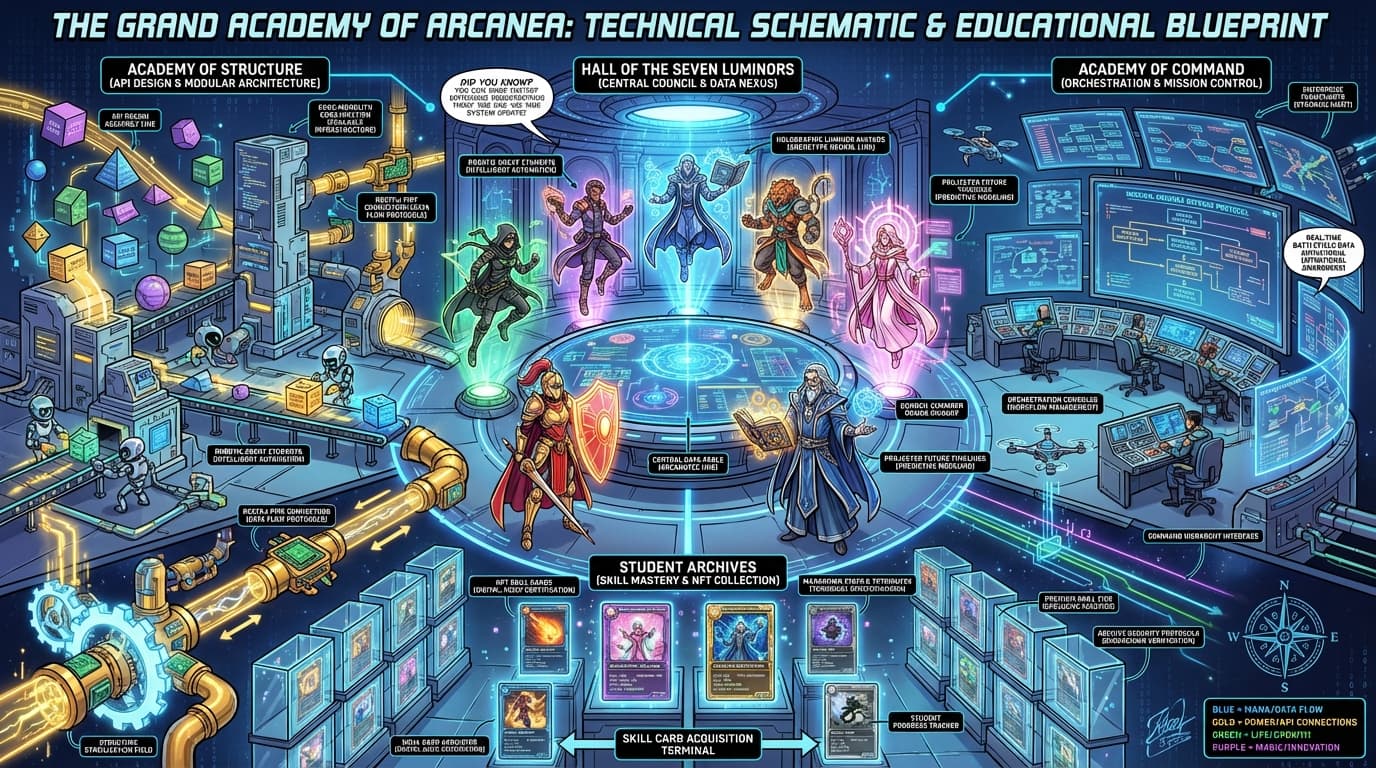
Creator Systems11 min
Arcanea: Building Worlds with AI Agents
How I built a fantasy civilization with 5 Eldrian characters, 10 Gates, and a living world-state — using Claude Code, Gemini, and agentic workflows.
Read article
AI & Systems7 min read
Claude Code 2.1: How MCP Tool Search Changed Everything
Claude Code 2.1 introduces MCP Tool Search, cutting token usage by 85% and boosting accuracy from 79.5% to 88.1%. A deep dive into the biggest productivity upgrade since launch.
Read article