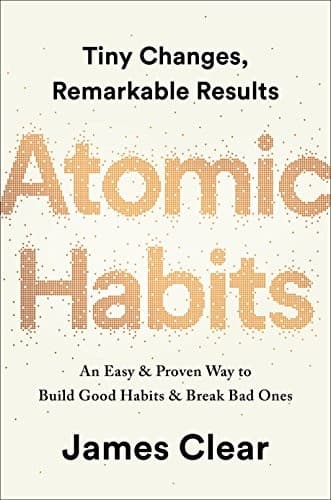
Atomic Habits
by James Clear
The Short Answer
Clear argues that habits compound like money — one percent better every day yields a 37× improvement in a year. The mechanism is not willpower; it is a four-law loop (make it obvious, attractive, easy, satisfying) applied through identity, environment, and systems, not goals.
The FrankX Newsletter
One book breakdown like this. One spotlight from the operating loop. Every Friday.
Key Insights
The 1% improvement principle: small changes compound into remarkable results over time
Identity-based habits: focus on who you wish to become, not what you want to achieve
The Four Laws of Behavior Change: make it obvious, attractive, easy, and satisfying
Environment design is more powerful than willpower — reshape your surroundings to shape your behavior
Habit stacking: pair a new habit with an existing one to create automatic triggers
Quotes Worth Remembering
15 curated passages from Atomic Habits. Chapter references map back to the book so you can re-read them in context.
You do not rise to the level of your goals. You fall to the level of your systems.
Chapter 1 — The Surprising Power of Atomic Habits
The book's thesis in one line. Goals set direction; systems determine whether you move.
Every action you take is a vote for the type of person you wish to become.
Chapter 2 — How Your Habits Shape Your Identity
Habits are the compound interest of self-improvement.
Chapter 1 — The Surprising Power of Atomic Habits
You should be far more concerned with your current trajectory than with your current results.
Chapter 1 — The Surprising Power of Atomic Habits
Environment is the invisible hand that shapes human behavior.
Chapter 6 — Motivation Is Overrated; Environment Often Matters More
Make it obvious. Make it attractive. Make it easy. Make it satisfying.
Chapter 3 — How to Build Better Habits in 4 Simple Steps
The Four Laws, stated as positive instructions. The negations — make it invisible / unattractive / difficult / unsatisfying — break habits.
The most effective form of learning is practice, not planning.
Chapter 11 — Walk Slowly, but Never Backward
Success is the product of daily habits — not once-in-a-lifetime transformations.
Chapter 1 — The Surprising Power of Atomic Habits
You do not need to be better than everyone else. You need to be better than you were last year.
Chapter 20 — The Downside of Creating Good Habits
The quality of our lives often depends on the quality of our habits.
Chapter 1 — The Surprising Power of Atomic Habits
Professionals stick to the schedule; amateurs let life get in the way.
Chapter 14 — How to Make a Habit Easy
The central question is not "How can I make this easier?" but "How can I make this obvious?"
Chapter 7 — The Secret to Self-Control
Clear's inversion of the productivity cliché. Obviousness is the invisible first step that most habit advice skips.
Time magnifies the margin between success and failure. It will multiply whatever you feed it.
Chapter 1 — The Surprising Power of Atomic Habits
Habits do not restrict freedom. They create it.
Chapter 20 — The Downside of Creating Good Habits
The counter-intuitive reframe that makes the book land — habits are a freedom technology, not a constraint technology.
You get what you repeat.
Chapter 15 — The Cardinal Rule of Behavior Change
Chapter-by-Chapter
Each chapter distilled to a key idea + 2–4 sentence summary — so you can navigate the book's argument without re-reading it, and re-read it with fresh compass if you want.
01The Surprising Power of Atomic Habits
Small habits compound — 1% better daily is 37× better in a year.
+
The Surprising Power of Atomic Habits
Small habits compound — 1% better daily is 37× better in a year.
Clear opens with the British Cycling team's marginal-gains story. The thesis: outcomes are lagging measures of habits. Systems beat goals because goals are temporary, but systems run continuously. A 1% daily improvement is the engine.
02How Your Habits Shape Your Identity (and Vice Versa)
Identity change is the real lever — habits are votes for the self you're becoming.
+
How Your Habits Shape Your Identity (and Vice Versa)
Identity change is the real lever — habits are votes for the self you're becoming.
Three layers: outcomes, processes, identity. Most advice targets outcomes. Clear argues identity is the root — change "I am a smoker" to "I am not the type of person who smokes" and the processes and outcomes follow.
03How to Build Better Habits in 4 Simple Steps
The Four Laws of Behavior Change — obvious, attractive, easy, satisfying.
+
How to Build Better Habits in 4 Simple Steps
The Four Laws of Behavior Change — obvious, attractive, easy, satisfying.
Introduces the loop: Cue → Craving → Response → Reward. Each law targets one stage. Build good habits by leaning into each law; break bad ones by inverting each.
04The Man Who Didn't Look Right
Make cues obvious — most behavior runs on autopilot you never notice.
+
The Man Who Didn't Look Right
Make cues obvious — most behavior runs on autopilot you never notice.
A paramedic spots a heart attack from across the room. Clear uses it to illustrate that habits start with cue detection. The Habits Scorecard: list every habit and mark + / − / = to surface the cues you're not seeing.
05The Best Way to Start a New Habit
Implementation intentions — "When X, I will Y" — beat vague resolutions.
+
The Best Way to Start a New Habit
Implementation intentions — "When X, I will Y" — beat vague resolutions.
Research: people who wrote down exactly when and where they would exercise followed through at 2–3× the rate of those who didn't. Time + location specificity is the critical difference.
06Motivation Is Overrated; Environment Often Matters More
Redesign the room, not the person.
+
Motivation Is Overrated; Environment Often Matters More
Redesign the room, not the person.
The stimuli most likely to drive behavior are the ones most visible. Move the remote, hide the phone, put the running shoes by the door. Environment design is compounding leverage — one-time setup, permanent behavioral shift.
07The Secret to Self-Control
Disciplined people are not different — they structure their lives to need less discipline.
+
The Secret to Self-Control
Disciplined people are not different — they structure their lives to need less discipline.
Self-control is an exhaustible resource in the short term. The trick is not to develop supernatural willpower but to avoid depending on it. Remove the cues of bad habits; you won't need to resist what you never encounter.
08How to Make a Habit Irresistible
Link new habits to anticipated rewards using "temptation bundling."
+
How to Make a Habit Irresistible
Link new habits to anticipated rewards using "temptation bundling."
Pair something you want with something you should do. Watch Netflix only while on the exercise bike. The dopamine spike comes from the expectation, not the reward — design the expectation.
09The Role of Family and Friends in Shaping Your Habits
You imitate the close, the many, and the powerful.
+
The Role of Family and Friends in Shaping Your Habits
You imitate the close, the many, and the powerful.
Three groups drive behavior: the close (family/close friends), the many (the tribe/culture), the powerful (status figures). Join groups where your desired behavior is normal — the work of "being disciplined" collapses into "fitting in."
10How to Find and Fix the Causes of Your Bad Habits
Every craving is a response to a feeling — find the underlying need.
+
How to Find and Fix the Causes of Your Bad Habits
Every craving is a response to a feeling — find the underlying need.
Habits are not about the behavior itself; they're about the state they deliver. You don't want to scroll; you want to feel stimulated or distracted. Reframe the craving by changing what you associate with the underlying need.
11Walk Slowly, but Never Backward
Action beats motion. Doing imperfectly beats planning perfectly.
+
Walk Slowly, but Never Backward
Action beats motion. Doing imperfectly beats planning perfectly.
Motion (reading, researching, planning) feels productive but is preparation. Action is the actual execution. The distinction matters because motion is where procrastination hides dressed as productivity.
12The Law of Least Effort
Reduce friction for good habits; add friction for bad ones.
+
The Law of Least Effort
Reduce friction for good habits; add friction for bad ones.
Humans are energy-conserving animals. The default path is the easy one. Put the vegetables at eye level; put the snacks on the top shelf. Each friction reduction is a behavioral tax cut; each added is a tax hike.
13How to Stop Procrastinating by Using the Two-Minute Rule
Scale every new habit down until it takes less than two minutes.
+
How to Stop Procrastinating by Using the Two-Minute Rule
Scale every new habit down until it takes less than two minutes.
"Read before bed" becomes "read one page." "Exercise" becomes "put on my running shoes." Once the two-minute version is automatic, you can optimize length — but the keystone is showing up, not performing.
14How to Make a Habit Easy
Environment + commitment devices make good behavior the default.
+
How to Make a Habit Easy
Environment + commitment devices make good behavior the default.
Examples: pre-pack the gym bag, set up automatic savings transfers, use apps with forced commitment. The common thread is removing the moment-of-decision from the moment-of-action.
15The Cardinal Rule of Behavior Change
What is immediately rewarded is repeated; what is immediately punished is avoided.
+
The Cardinal Rule of Behavior Change
What is immediately rewarded is repeated; what is immediately punished is avoided.
The brain weighs immediate outcomes more heavily than delayed ones. Good habits often have delayed rewards (exercise) and bad habits often have immediate ones (donut). The solution: engineer immediate rewards into the good habit or immediate costs into the bad one.
16How to Stick with Good Habits Every Day
Habit tracking creates visual evidence of identity.
+
How to Stick with Good Habits Every Day
Habit tracking creates visual evidence of identity.
A simple "X" on a calendar for each day completed is a powerful artifact. It triggers the cue-craving-reward loop for the habit itself. Don't break the chain.
17How an Accountability Partner Can Change Everything
A social cost for breaking the habit makes the future you obey the present you.
+
How an Accountability Partner Can Change Everything
A social cost for breaking the habit makes the future you obey the present you.
Commitment devices + social accountability turn abstract future costs into concrete present ones. Example: a signed contract with a friend who collects a penalty if you skip. The social friction is the behavioral glue.
18The Truth About Talent
Choose the game where your traits have an advantage.
+
The Truth About Talent
Choose the game where your traits have an advantage.
Genes don't determine destiny, but they determine comparative advantage. The question is not "Am I talented?" but "What game do I have the natural edge in?" Habits compound faster when the terrain suits the athlete.
19The Goldilocks Rule
Motivation peaks when difficulty is just past the edge of your current skill.
+
The Goldilocks Rule
Motivation peaks when difficulty is just past the edge of your current skill.
Too easy = boring. Too hard = overwhelming. The sweet spot is a 4% challenge above current ability. Habits fail when the task drifts out of this zone — a boredom signal is a design signal, not a character flaw.
20The Downside of Creating Good Habits
Automation is also the risk — stop getting better the moment you stop paying attention.
+
The Downside of Creating Good Habits
Automation is also the risk — stop getting better the moment you stop paying attention.
Habits optimize effort, which is good, but they also anesthetize you to feedback, which is not. Counter it with deliberate practice: periodically question whether the habit still serves the current goal and refine it.
Best For
Frequently Asked Questions
What are the Four Laws of Behavior Change?
+
1) Make it obvious (cue design), 2) Make it attractive (craving), 3) Make it easy (low friction), 4) Make it satisfying (immediate reward). The inverse of each breaks a bad habit. Clear treats the loop as a behavioral physics — you do not need more willpower, you need to redesign the environment and the reward.
What is identity-based habit change?
+
Instead of "I want to run a marathon" (outcome), you adopt "I am a runner" (identity). Every run becomes a vote for that identity. Outcome goals run out of fuel; identity compounds. Clear argues this is why most habit-change programs fail — they target the wrong level of the system.
What is habit stacking?
+
The formula: "After [current habit], I will [new habit]." You anchor the new behavior to an existing one so the completion of the first becomes the trigger for the second. The strength comes from leveraging already-grooved neural pathways instead of building new ones from scratch.
Is Atomic Habits just a summary of older habit research?
+
Partly — Clear synthesizes Duhigg, BJ Fogg, and decades of behavioral psychology. His original contribution is the Four Laws framework, the identity-vs-outcome distinction, and an uncommonly good job of making the implementation practical at the individual-day level.
Who is Atomic Habits NOT for?
+
People facing structural rather than behavioral problems — clinical addiction, severe environmental constraints, or mental-health conditions — will not find it sufficient. It also under-delivers for people whose problem is not "not doing enough" but "doing too much of the wrong thing." For most motivated adults with routine reshape needs, it is unmatched.
Continue Reading
If Atomic Habits opened a door, these books walk you through it. Curated for reason, not algorithm — each entry explains why it pairs with this book.
The Power of Habit
by Charles Duhigg
The popularization of the habit loop (cue–routine–reward). Clear's Four Laws extend Duhigg's framework. Read Duhigg first for the grounding, Clear second for the implementation.
Get the bookTiny Habits
by BJ Fogg
The Stanford researcher Clear borrows from heavily. Fogg's ABC model (Anchor, Behavior, Celebration) is a simpler, more ritualistic variant — particularly strong on the "make it satisfying" step Clear emphasizes.
Get the bookDeep Work
by Cal Newport
If Atomic Habits is how to make any habit stick, Deep Work is the specific habit with the highest leverage in the knowledge economy. Complementary, not overlapping.
Get the bookThe Checklist Manifesto
by Atul Gawande
The same principle applied to professional expertise — systems outperform unaided expert judgment. Convincing case that the "pilots and surgeons should just remember" instinct is wrong.
Get the bookMindset
by Carol Dweck
Clear's identity-based habits work only if you believe identity is malleable. Dweck's growth mindset is the underlying psychological pre-requisite — read it if "I'm just not a runner" feels true.
Get the bookWillpower
by Roy Baumeister & John Tierney
The ego-depletion framework Clear partially relies on. Tierney and Baumeister's case is more nuanced than Clear's summary — worth reading if you want to stress-test the "willpower is a limited resource" assumption.
Get the bookAntifragile
by Nassim Nicholas Taleb
Different frame, same conclusion about compounding — small stressors make systems stronger over time. Taleb applied to habits: exposure beats optimization.
Get the bookGo Deeper — Videos
The book is the foundation. These talks and interviews are where the ideas sharpen, get challenged, and connect to adjacent work. Best watched after reading, not instead of.
James Clear — Atomic Habits, Lessons from Gary V, and 1% Better Every Day
Tim Ferriss Show
The canonical long-form interview. Clear walks through the book's frameworks with Ferriss pushing back on edges. Best single source if you can only spare one video.
Atomic Habits by James Clear — TEDx Talk
TEDx
The 15-minute version of the book. Clear on the compounding math of 1% improvement and identity-based habits.
James Clear on How to Build Better Habits
The Knowledge Project
Shane Parrish interviews Clear. Lots of implementation-level detail — how to track habits, when to quit, what to do when you fall off the wagon.
The Science Behind Atomic Habits — Andrew Huberman Podcast
Huberman Lab
Huberman's neuroscience-lens treatment of habits. Not a Clear interview, but the biological explanation for why the Four Laws work — dopamine, basal ganglia, and timing.
If You Liked This, Read Ours
Our Book
The Art of Self-Development
Seven Pillars of a Complete Life
A systematic approach to building every dimension of your life — energy, mind, soul, craft, capital, circle, and legacy. Not theory. Routines that work.
Read free