Attention Scheduler
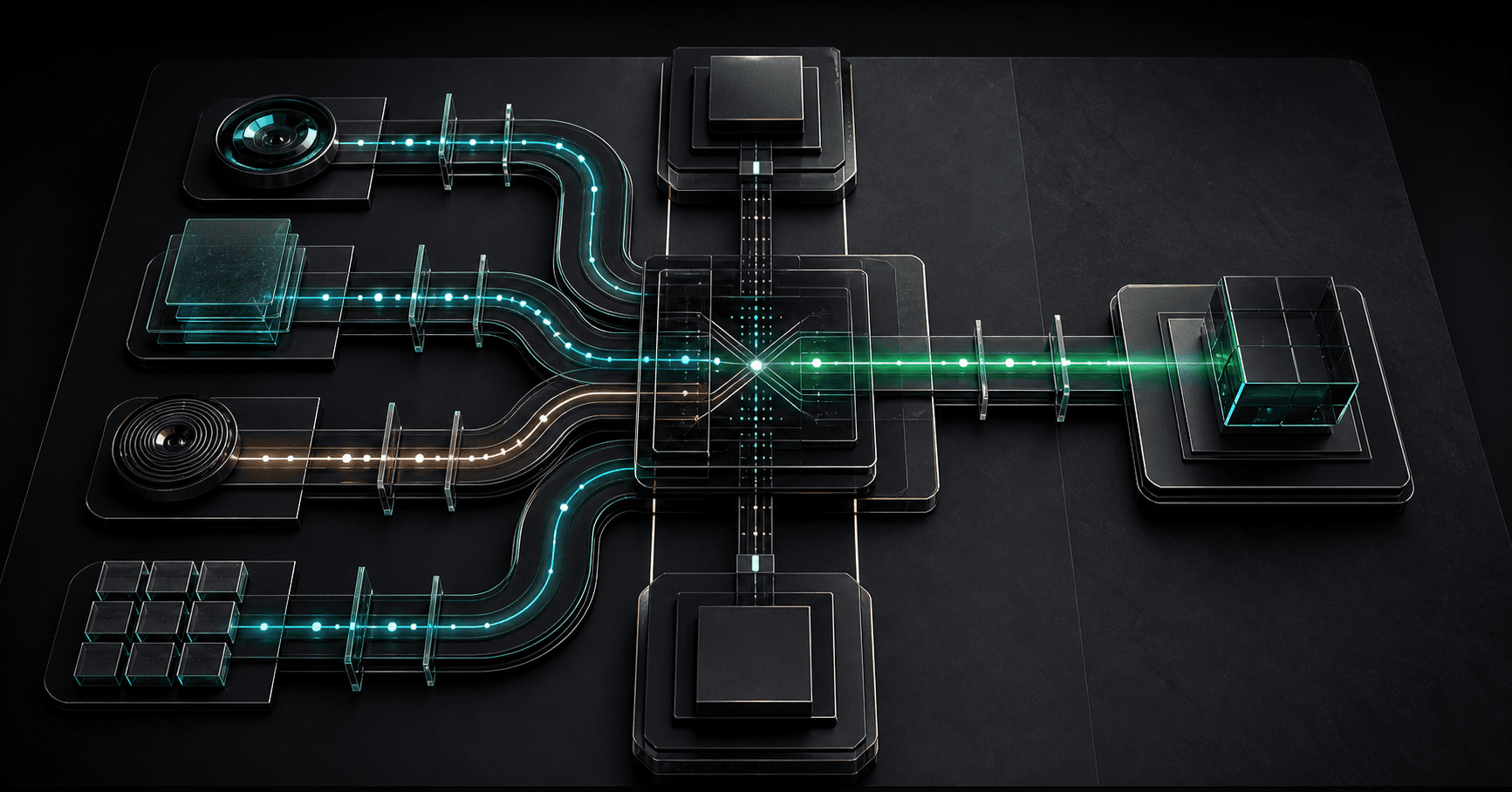
Decides what gets compute
The first bottleneck is not model speed. It is where attention goes, what gets ignored, and what earns a full pass.

FrankX Mind OS
Before agents, prompts, and workflows, there is the operator: attention, memory, taste, discipline, and feedback loops. This is how I keep mine useful while building with AI.
Attention
operator layer
Memory
operator layer
Taste
operator layer
Input
Context
Review
Ship
Operator Stack
AI tools amplify the operator. They do not remove the need for attention, memory, taste, or review. The stack below is the human layer I design around.
Attention Scheduler
The first bottleneck is not model speed. It is where attention goes, what gets ignored, and what earns a full pass.
Memory Layer
Working notes, prompts, examples, decisions, and mistakes become reusable context instead of scattered residue.
Model Updater
A useful operator updates the map after reality pushes back. Every build, failed test, and awkward result teaches the next move.
Taste Filter
Taste is the quality gate that removes generic output, weak hierarchy, unsupported claims, and pretty noise.
Execution Loop
Capture, compose, build, verify, publish, review. The loop matters because thinking that never ships decays.
From Noise To Output
01 / Noise arrives first
Messages, model releases, half-ideas, client needs, experiments, songs, code, and research all compete for attention.

02 / Attention makes a cut
The useful move is not consuming more. It is finding the few signals that deserve context, memory, and follow-through.

03 / Models become structure
Once a pattern repeats, it becomes a protocol, a template, a prompt, a page, an agent skill, or a repo.

04 / Review closes the loop
Shipping is not the end. It gives the mind new evidence: what worked, what felt cheap, what needs another pass.

Visual System
Each frame carries one role: focus, memory, architecture, taste, reflection, feedback, or studio context. The images are not decorative mood. They explain the page.
Hero system
Focus filter

Reusable context
Mental model

Quality filter
Noise filter

AI reflection
Review loop

Craft environment
Social summary
AI As Mirror
Weak prompts usually reveal weak thinking. Strong systems reveal clean constraints, useful memory, and a disciplined review loop. AI is most valuable when it makes the work easier to inspect.
Write the problem in plain language before choosing a tool.
Save prompts, outputs, and decisions where future work can reuse them.
Let one strong visual or mechanism carry a page before adding motion.
Run a critic pass before publishing anything meant to build trust.
Review shipped work after reality has touched it, then update the system.
Boundaries
The page uses operating-system language as a builder metaphor. It is not a medical model, a self-help promise, or a claim that tools can replace judgment.
Not therapy or a clinical model.
Not productivity theater.
Not a replacement for judgment.
Not a mystical claim about intelligence.
Not a prompt trick dressed up as philosophy.
Next Paths
Start with the weekly dispatch if you want the practical notes. Read the architecture series if you want the deeper map of intelligence, agents, and systems.