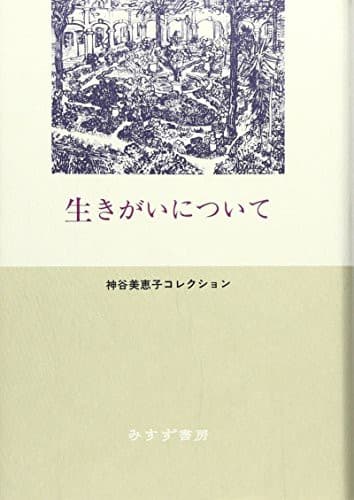
Ikigai-ni-Tsuite (生きがいについて)
by Mieko Kamiya
The Short Answer
The foundational psychiatric study of ikigai — published in Japanese in 1966, still largely untranslated. Kamiya was a psychiatrist at the Nagashima Aiseien leprosarium in Okayama; she watched patients whose external lives had been forcibly stripped reconstruct a reason to wake up, and built a clinical theory from what she observed. Forty years before the West translated her work, she had already named the distinction between ikigai-no-taishō (the object that gives meaning) and ikigai-kan (the felt sense of having meaning).
The FrankX Newsletter
One book breakdown like this. One spotlight from the operating loop. Every Friday.
Key Insights
Distinguished ikigai-no-taishō (the object that gives meaning) from ikigai-kan (the felt sense of meaning) — two related but separate phenomena that most pop versions collapse
Loss of ikigai-kan tracked clinically with depression risk in her leprosarium patients — the felt-sense was a leading indicator, not a lagging one
Ikigai is not synonymous with happiness or purpose; it is closer to the daily reason a specific life feels worth waking up to
Meaning often emerges from constraint, not from freedom — Kamiya's patients reconstructed ikigai precisely because their working lives had been taken from them
A psychiatric concept, not a self-help one — the West discovered ikigai in 2005; Kamiya had been treating it as a clinical variable for forty years
Best For
Frequently Asked Questions
Is this book available in English?
+
Not in a full authorized translation as of 2026. Excerpts and academic discussions of Kamiya's framework appear in English-language journals and in chapters of later ikigai books (notably Mogi 2017 and academic anthologies), but the primary text remains in Japanese. The most accessible English summaries are in Mogi's The Little Book of Ikigai and in Buettner's Blue Zones chapter on Okinawa, neither of which is a substitute for the original.
What is the difference between ikigai-no-taishō and ikigai-kan?
+
Ikigai-no-taishō is the object — the specific thing (gardening, raising a grandchild, finishing a manuscript) that gives a person their reason to wake up. Ikigai-kan is the subjective felt sense that one's life has meaning. The two usually correlate, but they can decouple — a person can have a clear object and lose the feeling, or hold the feeling without a single clear object. Kamiya's clinical contribution was naming the distinction; most pop versions ignore it.
Why did Kamiya study leprosy patients?
+
She worked as a psychiatrist at Nagashima Aiseien, a Japanese leprosarium where Hansen's-disease patients were segregated for life. She had constant access to people whose external life-structure had been stripped from them — career, family proximity, social standing — and who therefore had to reconstruct meaning from interior resources. The setting was effectively a natural experiment in what meaning looks like when nothing forces it. The parallel to the post-AI question — what is worth doing when work is no longer compulsory — is exact, four decades early.
How does Kamiya's clinical ikigai relate to the four-circle Venn?
+
It doesn't. The Venn is a 2014 Western career-coaching scaffold by Marc Winn, adapted from a 2011 "purpose" Venn by Andrés Zuzunaga. Neither Kamiya, Buettner, nor any Okinawan source describes ikigai as the intersection of four life domains. Kamiya's ikigai is closer to "the small daily reason this specific person bothers to be alive." The Venn is useful scaffolding for Western audiences but should not be confused with the Japanese clinical concept.
Where should I start if I can't read Japanese?
+
Read Buettner's Blue Zones chapter on Okinawa for the empirical grounding, then Mogi's Little Book of Ikigai for the neuroscience-aware Japanese summary that explicitly cites Kamiya, then García & Miralles for the Ogimi village fieldwork. The combination approximates Kamiya without replacing her — for research-grade work, find a translator.
Continue Reading
If Ikigai-ni-Tsuite (生きがいについて) opened a door, these books walk you through it. Curated for reason, not algorithm — each entry explains why it pairs with this book.
The Little Book of Ikigai
by Ken Mogi
Mogi explicitly references Kamiya and treats his five-pillar framework as a Japanese-native distillation of the same lineage. The closest English-language proxy to Kamiya's thinking.
Get the bookThe Blue Zones
by Dan Buettner
The empirical grounding. Buettner's Okinawa chapter is what put Kamiya's clinical word into Western consciousness in 2005 — even though Buettner did not cite Kamiya directly.
Get the bookIkigai: The Japanese Secret to a Long and Happy Life
by Héctor García & Francesc Miralles
The Ogimi village fieldwork. Frames ikigai as García & Miralles found it among Okinawan centenarians — closer to Kamiya's clinical "felt sense of meaning" than to any career-optimization Venn.
Get the bookMan's Search for Meaning
by Viktor E. Frankl
The parallel Western tradition. Frankl was Kamiya's contemporary; both developed clinical theories of meaning during and after WWII (Frankl in Vienna and Auschwitz, Kamiya in Okayama). Read together for the two-hemisphere conversation on the same question.
Get the bookIf You Liked This, Read Ours
Our Book
The Art of Self-Development
Seven Pillars of a Complete Life
A systematic approach to building every dimension of your life — energy, mind, soul, craft, capital, circle, and legacy. Not theory. Routines that work.
Read free